
Loading...
Serving Palmdale, CA and surrounding areas(661) 450-6647
Palmdale Insulation serves Tehachapi homeowners with spray foam insulation, attic insulation, and blown-in insulation suited to the area's 4,000-foot elevation and four-season climate. We have completed hundreds of insulation jobs across Kern County and carry a valid CSLB C-2 license (no. 1119137), so every project is permitted and inspected.
Tehachapi sits at roughly 4,000 feet in the Tehachapi Mountains of Kern County, positioned between the Mojave Desert to the east and the San Joaquin Valley to the west. The result is a climate unlike any other city in our service area: warm but not scorching summers, genuine winters with occasional snow, and nights that can drop 40 degrees below the afternoon high. Locals call it a mountain oasis, and the landscape backs that up, with wind turbines blanketing the surrounding ridgelines of one of North America's largest wind energy corridors and the famous Tehachapi Loop drawing railroad enthusiasts from across the country.
Residential housing in Tehachapi ranges from mountain homes on larger parcels in Bear Valley Springs and surrounding communities to more compact in-town neighborhoods near downtown. The city has a population of about 12,400, with roughly 59% homeownership — a solid base of long-term owner-occupied properties that often need insulation upgrades to match the demands of a genuine four-season climate. Homeowners closer to California City and Rosamond on the desert floor deal with heat but not cold; Tehachapi homes deal with both.
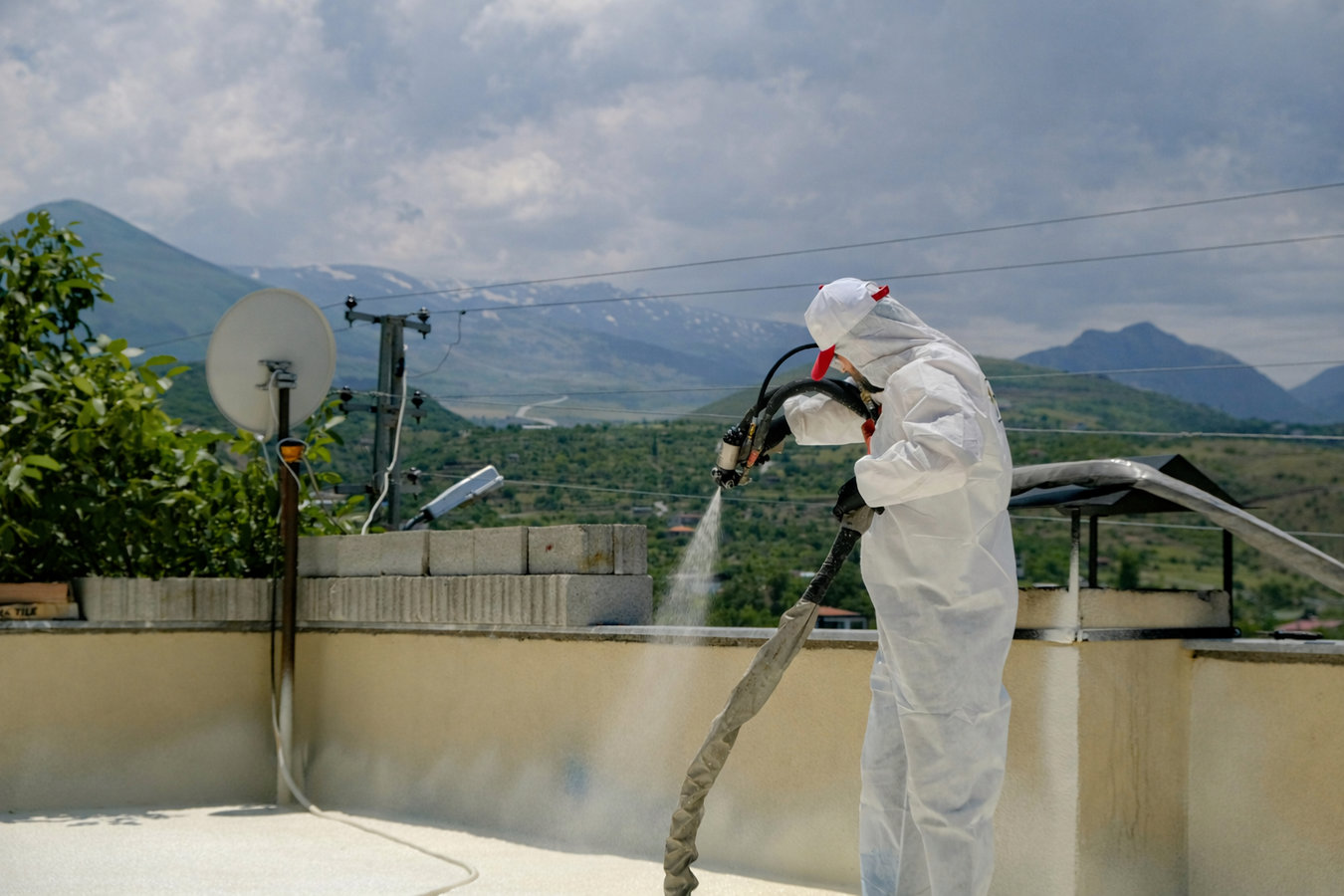
Closed-cell spray foam is the most effective option for Tehachapi's climate because it achieves R-6 to R-7 per inch while also blocking the moisture that mountain weather introduces. At 4,000 feet, you need insulation that works through snow, heavy frost, and summer heat cycles — closed-cell foam does that in a single application.
We serve California City homeowners and commercial properties with the same licensed crew and material specifications as our Tehachapi jobs. If you own property in both communities, one contractor handles everything.
Tehachapi's winter cold enters homes primarily through an under-insulated attic. Many older homes here were built to R-19 — less than half of what Climate Zone 14 now recommends. Adding blown-in insulation above existing batts is often the fastest and most cost-effective upgrade for keeping heating bills manageable from November through March.
Loose-fill insulation is the standard top-up method for Tehachapi attics where existing batts are still sound but below current R-value targets. We use a settled-depth ruler card so inspectors and homeowners can verify performance after installation — not just trust a contractor's word.
Tehachapi homes on raised foundations experience cold floors in winter because crawl spaces drain heat directly through the subfloor. Insulating crawl space walls or floor joists keeps the conditioned floor above from losing heat to ground-level cold air — a common issue in mountain communities that homeowners often mistake for a heating system problem.
Mountain winds accelerate air infiltration through attic penetrations, top-plate gaps, and rim joists. In Tehachapi, sealing these leaks before or during insulation installation can reduce heating energy use by 20–30% on its own. We treat air sealing as a required first step, not an optional add-on.
Tehachapi's four-season mountain climate creates a demand profile that is unique among our service area communities. At 4,000 feet, summer afternoons can reach the mid-90s while winter nights drop into the low 30s and below. Frost and occasional snow are real events — not abstractions — from November through March. That kind of temperature swing is brutal on under-insulated homes: air conditioners run hard in summer, furnaces run hard in winter, and utility bills reflect both.
The housing stock adds to the challenge. Homes built during Tehachapi's earlier growth periods were insulated to the code minimums of their era, many of which are now significantly below what the California Energy Commission's current Zone 14 standards require. An attic insulated to R-19 in 1985 delivers roughly half the thermal protection that Zone 14 now mandates — and that gap shows up in every monthly utility statement.
The elevation also means crawl space cold is a real factor. Homes on raised foundations in Tehachapi lose significant heat through the subfloor when crawl spaces are uninsulated or poorly sealed. Combining attic insulation upgrades with crawl space work closes both pathways and produces the most noticeable improvement in year-round comfort.
Insulation work in Tehachapi is permitted through the Kern County Building Inspection Division — not a city building department — because Tehachapi is a small incorporated city that contracts county services for some permit processing. That distinction matters when planning project timelines, because county inspection schedules can differ from a city's in-house process.
Practically speaking, we know that attic access in older Tehachapi homes is often tighter than in Antelope Valley tract houses, and that crawl spaces under mountain properties can accumulate moisture differently than desert-floor homes. Highway 58 connects Tehachapi to the broader region, and the communities along Tehachapi-Willow Springs Road and the canyon areas leading toward the Tehachapi Loop are part of the regular run for our crews. The wind turbine country above the city looks dramatic from the road; inside the homes at its base, it means attic air sealing matters more than it would in a calm-air environment.
We also serve nearby Agua Dulce and Acton along the mountain corridor, so our crews are regularly working in elevation-affected properties across this part of the region.
Reach out by phone or through our contact form. We respond to every Tehachapi inquiry within one business day and work around your availability for scheduling — no pressure to commit during the first call.
A technician visits your home, measures existing insulation depth, checks for air leaks and moisture, and produces a written quote before any work begins. The assessment is free and carries no obligation — you will know exact costs and scope before agreeing to anything.
Our CSLB C-2 licensed crew handles the installation, including any air sealing prep. For spray foam projects in occupied spaces, you will need to vacate for 24 hours; most blown-in jobs allow you to remain home with the attic access area cleared.
We leave depth ruler cards, product labeling, and all documentation required for permit close-out. If a Kern County inspection is required, we coordinate scheduling directly so you do not have to manage the back-and-forth.
We respond to every Tehachapi inquiry within one business day. The estimate is free, the quote is written, and there is no obligation to move forward. Fill out the form or call us directly — whichever is easier for you.
(661) 450-6647Spray foam creates an air-tight thermal barrier that stops heat transfer and air infiltration in walls, attics, and crawl spaces.
Learn moreProper attic insulation reduces heat gain in summer and heat loss in winter, easing the load on your HVAC system year-round.
Learn moreBlown-in insulation fills irregular cavities and hard-to-reach spaces with a seamless layer of thermal protection.
Learn moreWhole-home insulation assessments and installations address every zone of heat loss to improve comfort and lower utility bills.
Learn moreOld, damaged, or contaminated insulation is safely extracted before new material is installed for maximum performance.
Learn moreInsulating the crawl space floor and rim joists keeps floors warmer, reduces moisture intrusion, and cuts energy costs.
Learn moreRetrofit and new-construction wall insulation controls heat flow and reduces noise transmission between interior spaces.
Learn moreAir sealing closes gaps, cracks, and penetrations that allow conditioned air to escape and outside air to enter your home.
Learn moreInsulating basement walls and rim joists prevents cold floors above and protects pipes from temperature extremes.
Learn moreClosed-cell spray foam delivers the highest R-value per inch and acts as both an air barrier and a vapor retarder.
Learn moreOpen-cell spray foam is a cost-effective choice for interior walls and attics where a vapor-permeable barrier is preferred.
Learn moreSealing attic bypasses before adding insulation prevents warm air from rising into the attic and greatly reduces energy waste.
Learn moreA heavy-duty vapor barrier on crawl space floors blocks ground moisture from entering the structure and damaging insulation.
Learn moreVapor barrier installation in walls and floors controls moisture movement to prevent mold growth and insulation degradation.
Learn moreRetrofit insulation upgrades existing homes with modern materials without the need for extensive demolition or reconstruction.
Learn moreCommercial insulation services cover warehouses, office buildings, and industrial facilities to meet code and reduce operating costs.
Learn moreServing these cities and communities.
Call Palmdale Insulation today for a free on-site estimate — we know mountain properties and we know what Kern County inspectors look for.