
Open-Cell Foam Insulation
A softer, more flexible foam option that is effective for interior walls and areas where maximum R-value per inch is not the primary requirement.
Learn moreServing Palmdale, CA and surrounding areas. (661) 450-6647
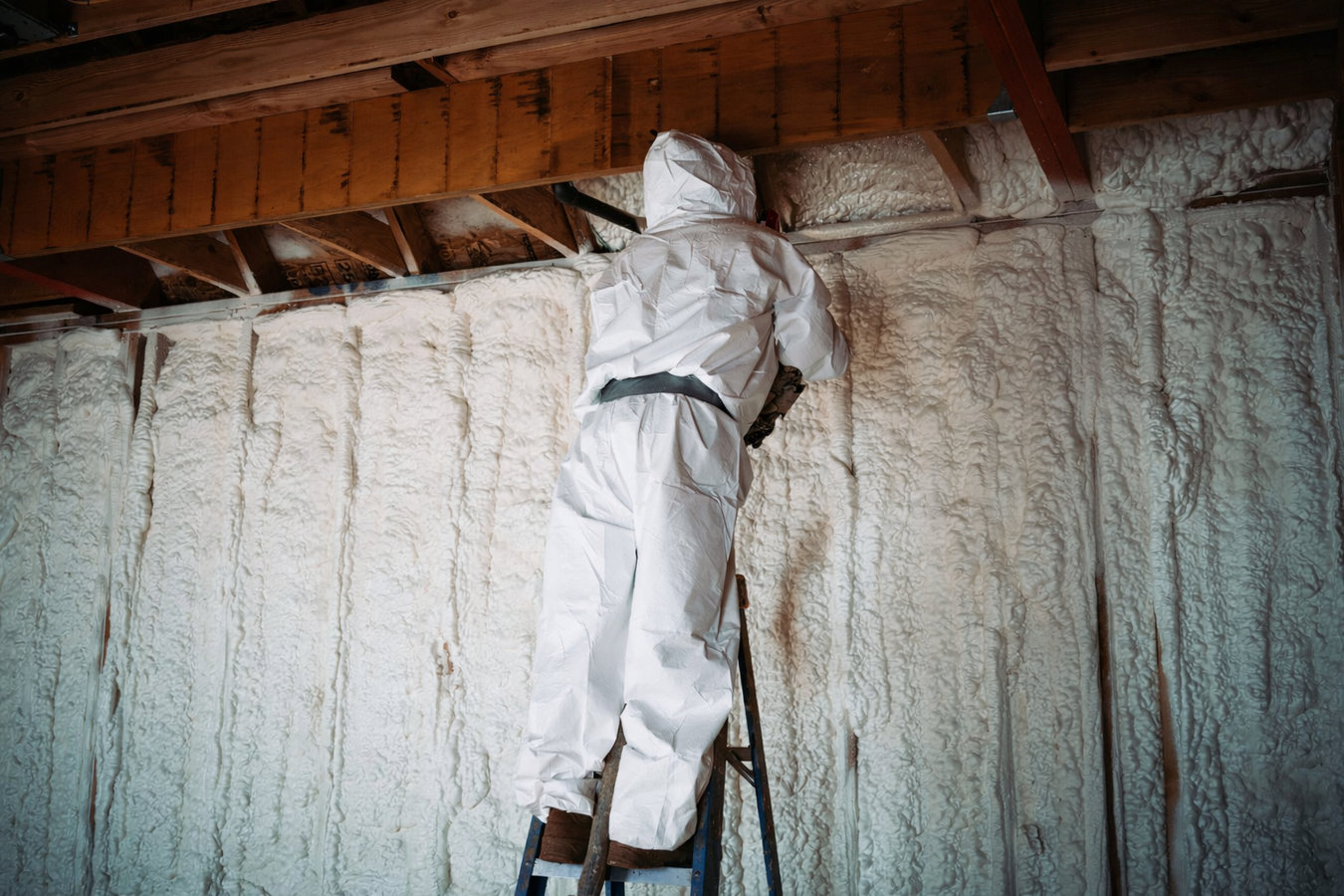
Palmdale summers push past 100 degrees, and aging insulation lets that heat pour into your home all day. Closed-cell foam seals and insulates in one application, so your AC stops fighting a losing battle.
Closed-cell foam insulation in Palmdale, CA gets sprayed as a liquid and expands into a rigid, dense barrier that insulates and seals air leaks at the same time - most residential jobs complete in a single day and the foam starts working the moment it cures.
Fiberglass batts and blown-in insulation slow heat transfer, but they do not seal air gaps on their own. Closed-cell foam does both jobs in one pass. In Palmdale's climate - where 40-degree temperature swings between day and night stress every seam in your home's envelope - that combination matters more than it would in a milder area.
Closed-cell foam is a strong choice on its own, and it also works well alongside open-cell foam insulation when different areas of the home call for different performance levels. Your contractor will recommend the right combination after assessing your specific conditions.
If your electricity bill climbs dramatically from May through September and your AC seems to run almost constantly, your insulation may not be doing its job. In Palmdale's triple-digit summers, a home with poor insulation forces your AC to fight a losing battle - and you pay for every hour of that fight.
If your living room is comfortable but your back bedroom feels like an oven by mid-afternoon, that is a sign of uneven insulation or air leaks in specific areas. Palmdale's intense afternoon sun hits west- and south-facing walls hard, and rooms on those sides are often the first to reveal insulation problems.
Palmdale's wind-driven dust is persistent. If it finds its way in through gaps in the attic, walls, or crawl space, you will see it on countertops and furniture even on days when you have not opened anything. Those same gaps let your conditioned air escape, and closed-cell foam addresses both problems at once.
Homes built during Palmdale's 1980s and 1990s growth boom were constructed to older standards that are significantly less effective than what is available today. If you have lived in your home for years and cannot recall any insulation work, there is a good chance the original material has settled, degraded, or was simply never adequate for the desert climate.
We install closed-cell foam in attics, walls, crawl spaces, and rim joists across Palmdale and the surrounding Antelope Valley. The attic is the most common application - it is where the most heat enters a single-story ranch home in this climate, and closed-cell foam's rigid, airtight coverage handles the job better than loose-fill materials alone.
For homeowners comparing foam types, we also install open-cell foam insulation, which is softer and less expensive per square foot but provides a lower R-value per inch. Closed-cell is the stronger choice wherever moisture resistance or maximum R-value per inch is a priority. Our full range of spray foam insulation services covers both types.
Every job includes a pre-spray assessment to verify surface conditions and identify any gaps that need to be addressed. We also coordinate any required permits through the City of Palmdale's Building and Safety Division.
Best for Palmdale's single-story ranch homes where the attic is the primary heat entry point on long summer days.
Seals and insulates crawl spaces in a single application - ideal where moisture resistance and a tight thermal boundary are both priorities.
Targets the spots in 1980s and 1990s tract homes where air infiltration is greatest: rim joists, band joists, and wall cavities with gaps.
For homes where different areas have different requirements - closed-cell in high-performance zones, open-cell in areas where cost or flexibility is more important.
Palmdale sits in the Antelope Valley at roughly 2,700 feet above sea level, and the climate here is genuinely different from coastal Southern California. Summer temperatures regularly exceed 100°F, and the city sees dramatic temperature swings between daytime highs and nighttime lows - sometimes a difference of 30 to 40 degrees in a single day. That thermal cycling stresses building materials and exploits every gap in a home's envelope. Closed-cell foam's rigid, airtight seal holds conditioned air in place through the night in a way that looser insulation materials cannot match.
The Antelope Valley is also known for strong spring winds and persistent fine dust. Those same pathways that let heat in also let dust in, and closed-cell foam seals them off in a single application. Families dealing with dust-related allergies or respiratory sensitivities often notice an improvement in indoor air quality after foam work - not just lower energy bills. California's Title 24 energy efficiency standards apply to any permitted insulation work here, so every job we do meets a verified performance floor.
We install closed-cell foam throughout Palmdale and across the wider region, including Lancaster and Hesperia. Most homes we work on in this area were built in the 1980s or 1990s and have never had an insulation upgrade - those homes have the most to gain from a properly done foam job.
We respond within 1 business day. The first conversation is brief - we ask about your home's age, which areas you are considering, and what is prompting the call. No commitment at this stage.
We visit your home to look at the attic, crawl space, or walls - wherever the work will happen. We measure, check what is currently there, and give you a written estimate that breaks down the scope of work and the cost.
For larger attic jobs or work tied to a renovation, a building permit from the City of Palmdale may be required. We handle all of this for you - you do not need to visit the building department or manage any paperwork.
The crew arrives with spray equipment and completes most residential jobs in a single day. You will need to be out of the home during spraying and for a set re-entry window afterward - we give you that time in writing before work starts.
Free on-site assessment, written estimate, no obligation. We respond within 1 business day and handle all permit requirements.
(661) 450-6647Spray foam is a specialized application. Every job we do in Palmdale is performed by an experienced C-2 insulation crew that understands California's installation and permitting requirements. If a permit is needed, we pull it before we start.
We know what 100-degree summers and 30-degree winters do to homes in this area. We match foam thickness, application method, and material specifications to the actual conditions your home faces - not generic national guidelines.
We schedule and staff for completion, not for stretching the job across multiple visits. Most closed-cell foam installations in Palmdale are done start to finish in one day. We give you your re-entry time in writing before work begins so you can plan accordingly.
We work throughout Palmdale and across the broader Antelope Valley region. Knowing the local housing stock, permit offices, and climate conditions means faster turnaround and fewer surprises for you.
Spray foam done right is a long-term investment. Spray foam done poorly - rushed, thin, or without proper surface prep - underperforms and is difficult to fix once it cures. The Spray Polyurethane Foam Alliance sets training standards for qualified applicators; asking about a contractor's training history is a reasonable thing to do before you hire anyone for this work.
A softer, more flexible foam option that is effective for interior walls and areas where maximum R-value per inch is not the primary requirement.
Learn moreOur full spray foam offering covers both closed-cell and open-cell applications for attics, walls, crawl spaces, and more.
Learn moreSummer is coming - schedule your assessment now and lock in your installation date before the heat arrives and the schedule fills up.