Crawl space vapor barrier
Control moisture and air infiltration from below the floor - the other major pathway that a sealed attic alone does not address.
Learn moreServing Palmdale, CA and surrounding areas. (661) 450-6647
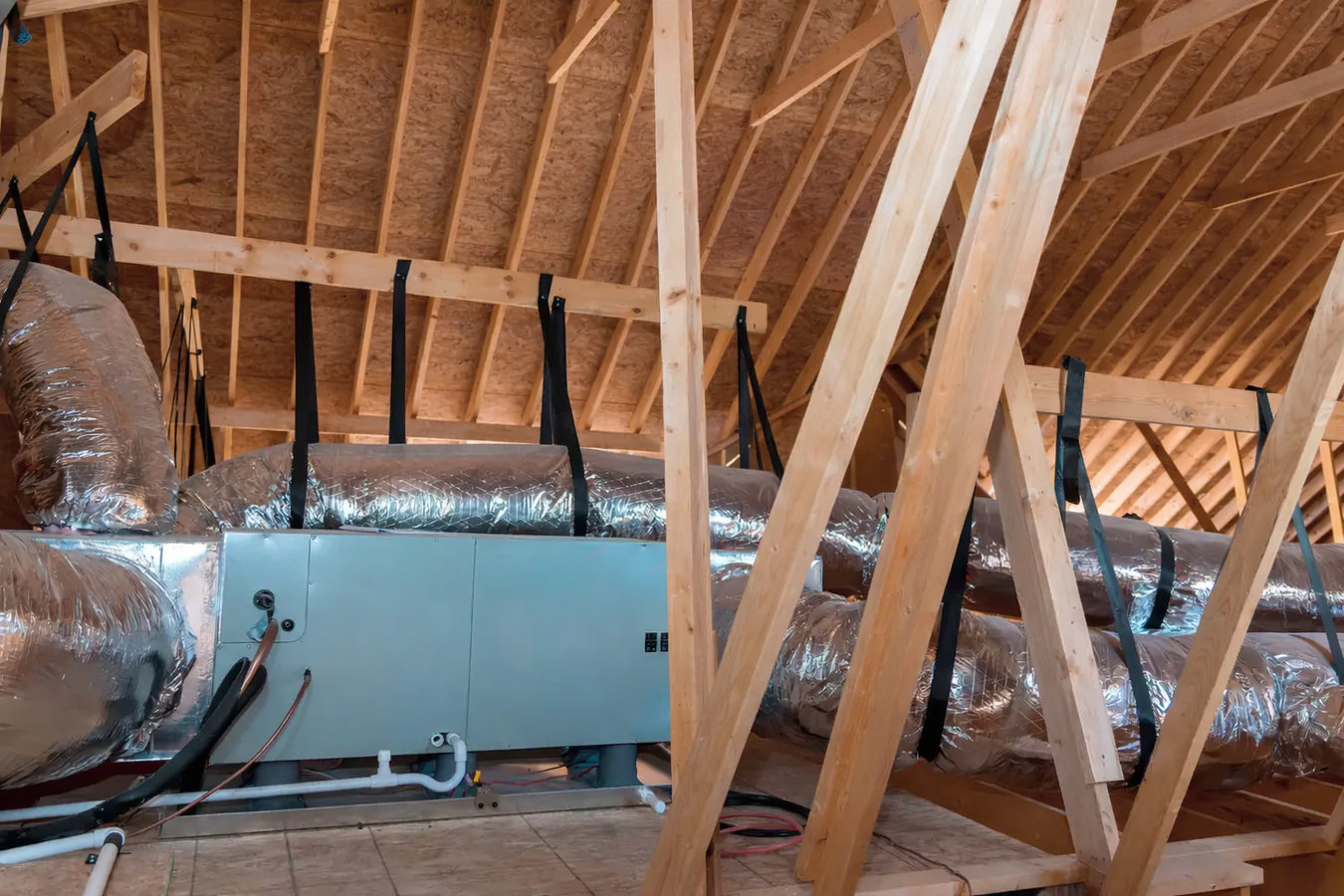
If your home never quite reaches the temperature you set, the air you pay to cool is escaping through gaps in your attic floor. We find and plug every one of those gaps so your home holds temperature and your AC can keep up.
Attic air sealing in Palmdale, CA means finding and plugging every gap where your living space connects to your attic - most residential jobs are completed in a single day and the results are measurable with a blower door test before and after the work.
Most of the air escaping into your attic does not come through the drywall itself - it sneaks through gaps around light fixtures, plumbing pipes, electrical wires, and the tops of interior walls. These openings are invisible from below, which is why a professional needs to get into the attic and look. In Palmdale, where summer temperatures regularly exceed 100°F and seasonal desert winds push fine dust through any available opening, those gaps are costing you money on every utility bill and degrading your indoor air quality at the same time.
Air sealing and insulation work as a team. Homeowners who want to address both air movement and thermal performance typically pair attic air sealing with whole-home air sealing services or a crawl space vapor barrier to close the other major infiltration points in the building envelope.
If your air conditioner seems to run constantly on hot Palmdale days without ever getting the house truly comfortable, cooled air is likely escaping into the attic as fast as the system produces it. You are essentially air conditioning your attic along with your living space. Sealing those leaks lets your system do its job without working twice as hard.
Palmdale's high desert winds carry fine dust and grit that can find its way inside through attic gaps even when every window and door is shut. If you are wiping down counters and furniture more than you would expect, or if your HVAC filter gets dirty unusually fast, air is likely entering through the attic. This is a local condition that air sealing addresses directly.
Uneven temperatures from room to room - especially on the top floor - often point to air leaking between your living space and the attic. The rooms farthest from your HVAC unit tend to suffer most. If one bedroom is always warmer in summer than the rest of the house, the attic above it is probably not sealed.
Stand under your attic access panel and feel for a noticeable draft, or check whether you can see light around the edges. That opening alone can leak a surprising volume of conditioned air. It is one of the easiest signs to spot yourself, and a reliable indicator that the rest of the attic has similar problems that are not as visible.
Palmdale Insulation provides attic air sealing across Palmdale and the wider Antelope Valley. The process starts with the crew accessing your attic through the hatch, moving or temporarily shifting existing insulation, and applying foam or caulk to every gap they find - around pipes, wires, light fixtures, and the tops of interior walls. The insulation is replaced and the work area is cleaned before we leave. Most single-story Palmdale homes are completed in one full day.
Many homeowners choose to combine attic air sealing with an insulation upgrade in the same visit. Sealing first and insulating second is always the correct order - adding insulation over unsealed gaps leaves most of the energy savings unrealized. A combined service is often the most cost-effective approach and the one that most rebate programs are designed around.
For homeowners dealing with leaks throughout the home - not just the attic - we also offer whole-home air sealing services that address the crawl space and wall penetrations as well. And for homes where the attic insulation itself has thinned or been damaged, we can assess whether a crawl space vapor barrier or a full insulation replacement is the better next step.
Foam and caulk applied around every pipe, wire, and fixture that passes through the attic floor - where the vast majority of air leakage occurs in most homes.
Sealing the gaps at the tops of interior walls where framing meets the attic floor - a common bypass that is easy to miss and difficult to reach without proper training.
Sealing and insulating the attic access panel - one of the largest single leakage points in many Palmdale homes and among the easiest fixes with the fastest return.
Seal every gap first, then bring insulation depth up to the recommended level - the approach that delivers the full performance improvement and qualifies for most rebate programs.
Palmdale sits at roughly 2,700 feet in the Antelope Valley, and summer temperatures regularly exceed 100°F - sometimes reaching 110°F or higher during heat waves. That heat radiates directly through your roof and into an unsealed attic, pushing through every gap into your living space and forcing your air conditioner to run at full capacity for months. Sealing the attic floor is one of the highest-impact improvements you can make to a Palmdale home, because it addresses the leakage pathway that drives the most energy waste during the months when your utility bills are already at their peak.
Palmdale also experiences genuine winter cold - overnight lows regularly drop into the 30s, and occasional freezes are normal from December through February. An unsealed attic lets warm indoor air escape upward all night, which means your heater runs longer and your floors feel colder in the morning. The same work that protects you in summer protects you in winter. A large share of the city's housing was built in the 1980s and 1990s, when air sealing was not a standard part of construction. If your home is from that era, it has almost certainly never had this work done. We serve homeowners throughout Palmdale and in nearby communities including Lancaster and Santa Clarita.
Southern California Edison and SoCalGas both offer rebates for qualifying attic air sealing projects, and a federal tax credit may cover up to 30 percent of your project cost. The Southern California Edison rebate program is worth checking before you sign any contract - some programs require pre-approval before work begins.
We respond within 1 business day. The first conversation is brief - we ask your home's size, when it was built, and what is prompting the call. No commitment is required to get a free estimate.
A technician accesses the attic, assesses how much leakage is present and where it originates, and many contractors use a blower door test at this stage to measure the starting condition and give you a clear, objective baseline.
You receive a written quote that breaks down what will be sealed, what materials will be used, and the total cost. We walk you through any rebate programs you qualify for through Southern California Edison or SoCalGas before you decide anything.
The crew seals every penetration in the attic floor, replaces any insulation that was moved, and cleans up. Most Palmdale homes complete in a single day. A post-job blower door test shows the measurable improvement before the crew leaves.
No pressure, no obligation. We reply within 1 business day and walk you through every available rebate before you decide anything.
(661) 450-6647Our crews specialize in attic air sealing and know how Palmdale homes are built. We coordinate any permits your job needs, pass city inspection, and hand you a documented record of the work before we leave.
We use blower door testing to measure air leakage before the work starts and again when it is complete. That second test is the proof the job was done - not just a contractor's word that things went well. Very few residential contractors in the Antelope Valley include this as a standard part of every attic air sealing job.
Southern California Edison serves Palmdale, and we know which rebate programs are active and what documentation each program requires. We provide the paperwork you need to file your rebate claim, so you are not left sorting it out on your own after the work is done.
The majority of Palmdale's housing stock was built during the city's rapid growth in those decades, and those homes were never air sealed to modern standards. We have assessed and sealed hundreds of homes from that era in the Antelope Valley - we know where the gaps are and how to reach them efficiently.
These are the things that matter when you are hiring someone to work in the ceiling of your home. We want you to feel confident in the decision before we start - and we want the results to be verifiable when we finish.
The ENERGY STAR Seal and Insulate program and the Building Performance Institute are two independent sources for information on air sealing standards and what to expect from a well-qualified contractor.
Control moisture and air infiltration from below the floor - the other major pathway that a sealed attic alone does not address.
Learn moreA whole-home approach to sealing air leaks at the attic, crawl space, and wall penetrations in a single comprehensive project.
Learn moreSummer cooling season is coming - seal your attic now and your home will hold temperature from the first hot day. We schedule within days, not weeks.