Loading...
Serving Palmdale, CA and surrounding areas(661) 450-6647
Palmdale Insulation provides home insulation, attic insulation, and air sealing to Canyon Country households across the Soledad Canyon corridor and Santa Clarita Valley. We have completed more than 300 insulation jobs in the region and hold an active CSLB C-2 license, so your project is properly permitted and ready for Santa Clarita Building and Safety inspection.
Canyon Country is the largest of Santa Clarita's four distinct neighborhoods, home to roughly 92,900 residents and positioned in the eastern portion of the city along the Soledad Basin — flanked by the Sierra Pelona Mountains to the north and the San Gabriel Mountains to the south. Soledad Canyon Road is the main corridor through the community, and the area carries deep roots: the Tataviam people inhabited this land for centuries before the Spanish incorporated it into the grazing territory of Mission San Fernando. By 1872, Canyon Country had its first school — now known as Sulphur Springs Elementary — and the community has grown steadily ever since. Today, its residents are served by three school districts and a College of the Canyons satellite campus that sits within the neighborhood itself.
Housing in Canyon Country ranges from master-planned subdivisions to canyon-road properties on acreage, with a population that skews strongly family-oriented — more than 21% of residents are under 15. The neighborhood sits within the City of Santa Clarita, so permits go through the Santa Clarita Building and Safety Division. We also serve homeowners in neighboring Santa Clarita and throughout the Saugus and Valencia areas.
Canyon Country's family-sized single-family homes — many built in the 1990s and early 2000s — were installed to code minimums that have since been updated by the California Energy Commission. A comprehensive home insulation assessment identifies the attic, walls, and crawl space locations where your home is losing the most energy and targets upgrades where they deliver the most measurable return.
We serve all four of Santa Clarita's neighborhoods — Newhall, Valencia, Saugus, and Canyon Country — with the same licensed crew and specifications. If you own or manage properties across different community areas, we can handle them all under one contractor relationship.
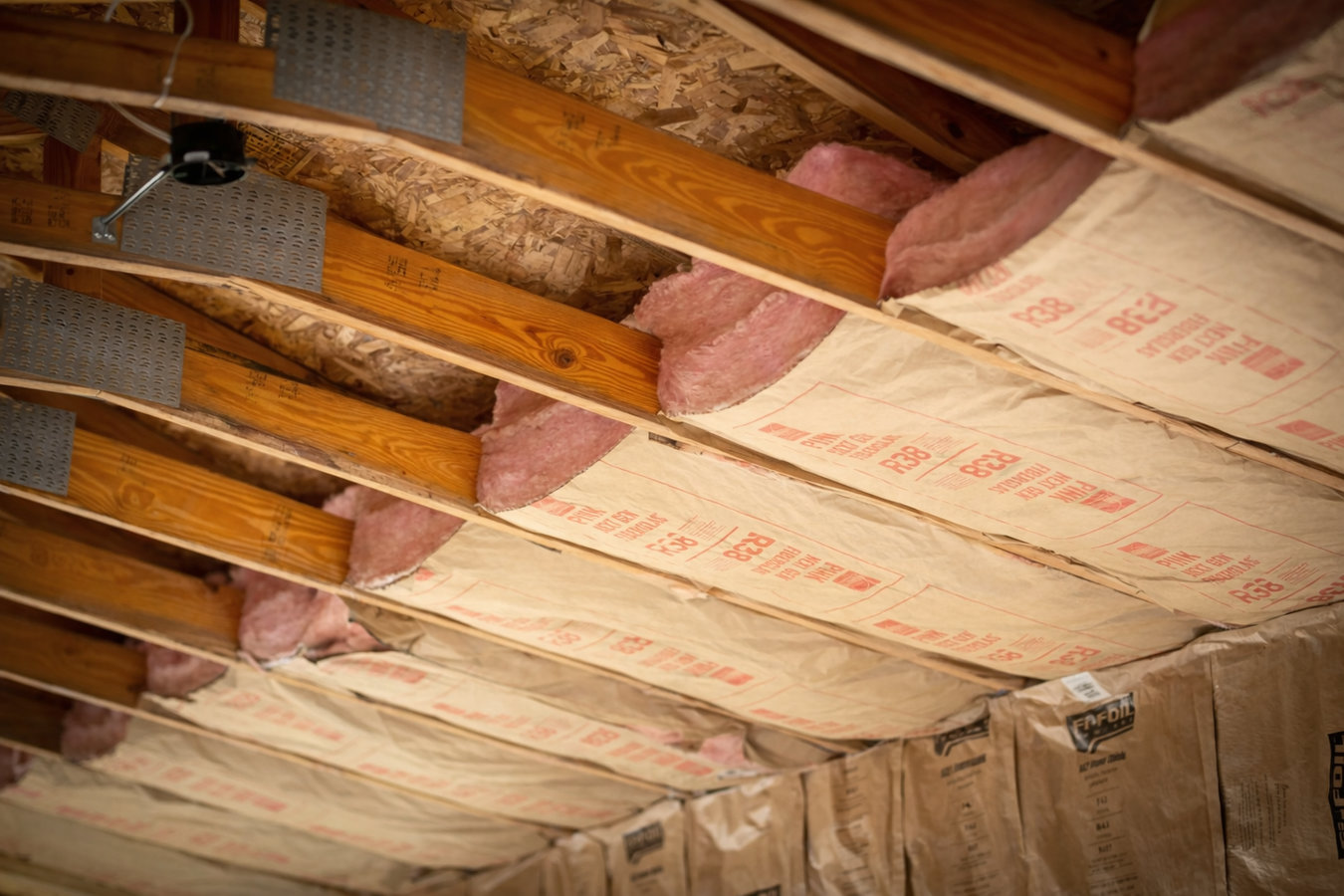
Many Canyon Country homes built before 2005 were insulated to R-19 or R-30 — below what today's Title 24 Zone 6 requirements recommend. Adding blown-in insulation above existing undamaged batts is the most efficient path to closing that gap, and it typically takes less than a day for most tract-size attics on Soledad Canyon Road or the surrounding streets.
Canyon Country's established housing stock makes retrofit work one of the most common project types we handle here. Drill-and-fill wall insulation, attic floor top-ups, and crawl space upgrades all fall under retrofit scope — improving envelope performance in a home that cannot be torn open like new construction.
The canyon geography that defines Canyon Country channels cold air toward the valley floor on winter nights, and homes with poorly sealed attic penetrations let that air in. Sealing top-plate gaps, recessed light cans, and wiring penetrations before adding insulation makes the insulation perform closer to its rated R-value in real conditions — not just on paper.
Canyon Country properties on raised foundations — particularly those along canyon roads and hillside lots — lose heat through uninsulated subfloors. Insulating floor joists or crawl space walls stops that drain, improves indoor air quality by reducing ground-moisture infiltration, and makes first-floor living spaces noticeably warmer in winter.
Canyon Country is not a desert community in the way Palmdale or California City are. It sits in the Santa Clarita Valley where summer heat is real but winters are genuinely cold — nighttime temperatures regularly drop into the low 40s from November through February, and the canyon topography accelerates that cooling as cold air drains downslope overnight. Homes in the Soledad Basin feel that temperature differential more acutely than properties on flat valley land.
The housing stock compounds the challenge. Canyon Country grew largely through master-planned development in the 1990s and early 2000s, when California's energy code required substantially less insulation than it does today. A home built in Canyon Country in 1998 was likely insulated to R-19 or R-30 in the attic — the current California Energy Code for Climate Zone 6 recommends R-38 or higher. That gap does not close on its own.
The seismic setting adds a practical layer: Canyon Country sits within the geologically active Soledad Basin near the San Andreas Fault system. Minor seismic events and the settling they cause over decades can disturb batt insulation that was never stapled or secured tightly, leaving gaps in the thermal envelope that no one notices until utility bills start climbing. A physical inspection with depth measurement catches this quickly.
Canyon Country falls within the City of Santa Clarita, which has its own Building and Safety Division — a distinction that matters because homeowners sometimes assume county offices handle permits for their neighborhood. Insulation work tied to any permitted renovation goes through the city's permit portal, and Santa Clarita inspectors are thorough about depth ruler cards and product labeling. We handle the permit coordination as part of every applicable project.
On a practical level, we have worked in Canyon Country homes from the Soledad Canyon Road corridor to the hillside streets above Canyon High School and Golden Valley High. The two-story tract homes that dominate the neighborhood often have split attic configurations — a section over the garage that is accessed separately from the main living area — and that detail affects how blown-in insulation quantities are calculated. Getting it wrong on the estimate creates re-work; we measure both sections.
We also serve Acton and Agua Dulce along the Soledad Canyon corridor, so our crews regularly travel this part of the Santa Clarita Valley and know the drive and the neighborhoods well.
Submit a request through our contact form or call directly. Every Canyon Country inquiry gets a response within one business day — often the same day — and scheduling is built around your availability.
A technician visits, measures attic depth, checks for air leaks, and assesses crawl space or wall conditions. You receive a written quote at the end — no phone estimates, no hidden variables, no obligation to commit on the spot.
Our CSLB C-2 licensed crew handles the work start to finish. Most blown-in attic jobs in Canyon Country finish in under six hours; you can stay home for the majority of the day with just the attic access area cleared.
We leave product labels, depth cards, and all documents needed for Santa Clarita Building and Safety inspection. For permitted projects, we coordinate the inspection directly so you do not have to track the city's schedule yourself.
We respond to every Canyon Country request within one business day. The site visit is free, the estimate is in writing, and there is no pressure to move forward until you are ready. Call us or fill out the contact form and we will take it from there.
(661) 450-6647Spray foam creates an air-tight thermal barrier that stops heat transfer and air infiltration in walls, attics, and crawl spaces.
Learn moreProper attic insulation reduces heat gain in summer and heat loss in winter, easing the load on your HVAC system year-round.
Learn moreBlown-in insulation fills irregular cavities and hard-to-reach spaces with a seamless layer of thermal protection.
Learn moreWhole-home insulation assessments and installations address every zone of heat loss to improve comfort and lower utility bills.
Learn moreOld, damaged, or contaminated insulation is safely extracted before new material is installed for maximum performance.
Learn moreInsulating the crawl space floor and rim joists keeps floors warmer, reduces moisture intrusion, and cuts energy costs.
Learn moreRetrofit and new-construction wall insulation controls heat flow and reduces noise transmission between interior spaces.
Learn moreAir sealing closes gaps, cracks, and penetrations that allow conditioned air to escape and outside air to enter your home.
Learn moreInsulating basement walls and rim joists prevents cold floors above and protects pipes from temperature extremes.
Learn moreClosed-cell spray foam delivers the highest R-value per inch and acts as both an air barrier and a vapor retarder.
Learn moreOpen-cell spray foam is a cost-effective choice for interior walls and attics where a vapor-permeable barrier is preferred.
Learn moreSealing attic bypasses before adding insulation prevents warm air from rising into the attic and greatly reduces energy waste.
Learn moreA heavy-duty vapor barrier on crawl space floors blocks ground moisture from entering the structure and damaging insulation.
Learn moreVapor barrier installation in walls and floors controls moisture movement to prevent mold growth and insulation degradation.
Learn moreRetrofit insulation upgrades existing homes with modern materials without the need for extensive demolition or reconstruction.
Learn moreCommercial insulation services cover warehouses, office buildings, and industrial facilities to meet code and reduce operating costs.
Learn moreServing these cities and communities.
Call Palmdale Insulation for a free estimate — licensed work, written quotes, and permit coordination handled for you.