Closed-Cell Foam Insulation
Dense, moisture-resistant spray foam that insulates and air-seals basement walls in a single application.
Learn moreServing Palmdale, CA and surrounding areas. (661) 450-6647
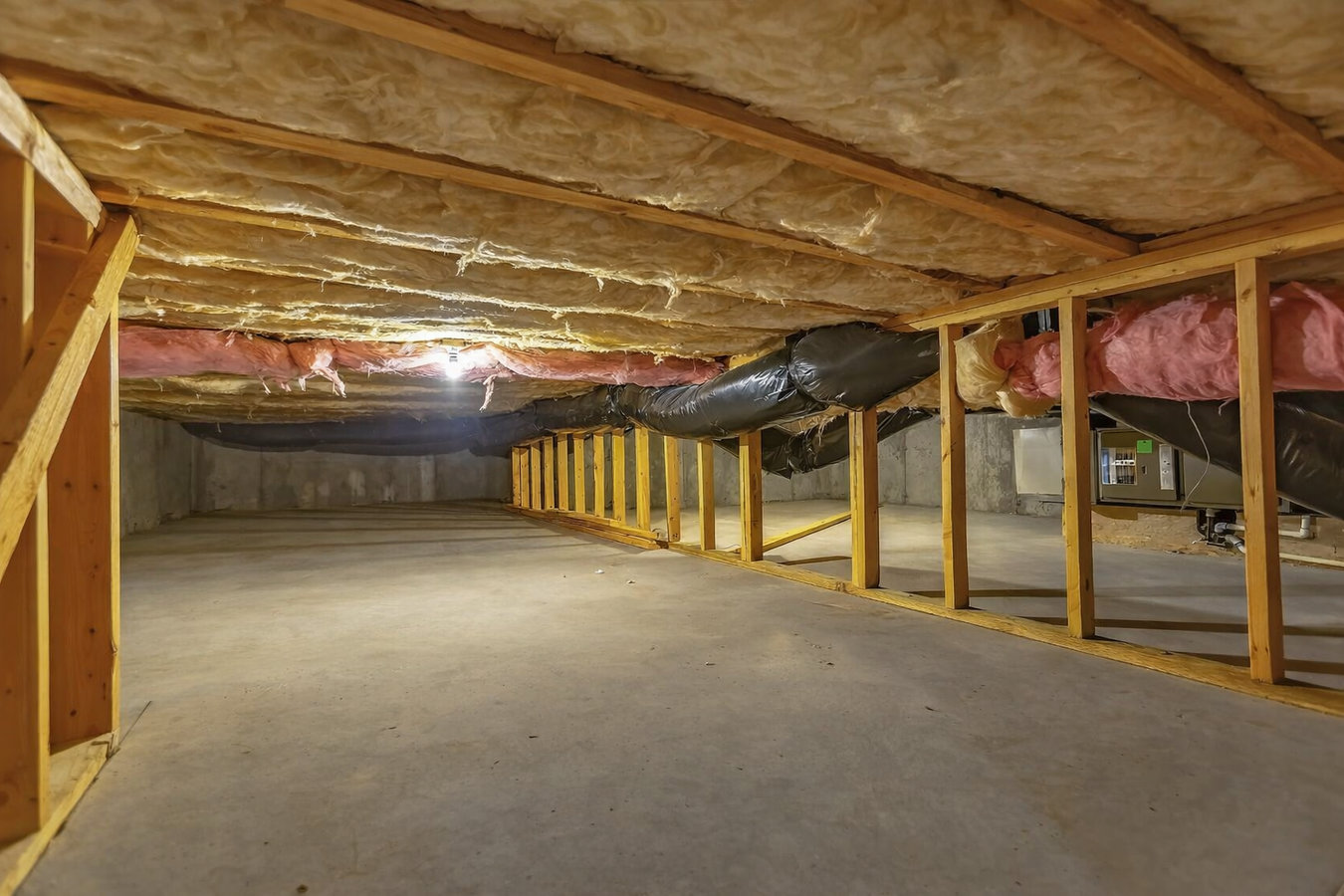
An uninsulated basement lets Palmdale's triple-digit summer heat push up into your living space and lets winter cold creep in through your floors. Proper basement insulation fixes both problems with one job.
Basement insulation in Palmdale, CA slows heat transfer through basement walls and the floor above - most straightforward jobs complete in one to two days and begin improving comfort immediately.
Palmdale sits in the Antelope Valley at roughly 2,700 feet, where summer highs regularly top 100°F and winter nights drop into the 30s. An uninsulated basement is a direct path for that outdoor extreme to enter your home from below. You feel it in the summer as a home that never quite cools down, and in the winter as cold floors that make your heating system work overtime.
Basement insulation works best as part of a whole-envelope approach. Many homeowners pair it with crawl space insulation to close off every low-level entry point for outside air and heat.
If your air conditioning runs almost constantly during Palmdale's triple-digit summer days and your bills are still high, heat may be getting in through uninsulated basement walls. An uninsulated basement acts like a radiator, pushing heat up into your living space all day long - one of the most overlooked reasons Palmdale homeowners overpay for cooling.
Palmdale winters are colder than most people expect, and cold basement air travels straight up through an uninsulated floor. If your first-floor rooms feel chilly near the ground even when the heat is running, the basement ceiling is likely the culprit. Walk barefoot across your first floor on a cold morning - it is one of the easiest self-checks a homeowner can do.
If your basement has insulation that is falling down, bunched up, or has obvious holes and gaps, it is no longer doing its job. Insulation that has been disturbed by pests, water, or age loses most of its effectiveness. A quick visual check of your basement walls and ceiling takes about five minutes and can tell you a lot.
Palmdale grew quickly in the late 1980s and 1990s, and many of those homes were built to the minimum standards of the time. Those standards are now considered inadequate by California's current energy code. If you have lived in your home for more than 20 years and cannot recall any insulation work, it is worth having a contractor take a look.
We insulate both basement walls and the basement ceiling depending on how you use the space. For unfinished basements used mainly for storage or mechanical equipment, insulating the ceiling - the underside of your first floor - keeps the conditioned air above it from losing heat downward. For finished or semi-finished basements used as living space, insulating the walls is the right approach.
Material selection depends on your basement's specific conditions. Rigid foam board and closed-cell foam insulation are both strong choices for basement walls in Palmdale's dry climate because they resist moisture and hold their R-value over time. We assess what you have before recommending anything.
Air sealing is part of every basement job we do. Insulating over unsealed gaps around pipes, wires, and joists leaves performance on the table. Pairing basement insulation with broader work like crawl space insulation gives your home a fully sealed lower envelope.
Suitable for finished or semi-finished basements where the walls are the primary thermal boundary with the outside.
Ideal for unfinished utility basements - insulating the underside of your first floor keeps heat from escaping downward.
A critical detail often missed in older Palmdale homes - sealing and insulating the rim joist eliminates one of the most common cold-air infiltration points.
For homes with both a basement and a crawl space, treating both areas together closes the full lower envelope in one mobilization.
Palmdale's position in the Antelope Valley at nearly 2,700 feet creates a climate unlike most of Southern California. Summer temperatures regularly exceed 100°F, and that heat radiates through uninsulated basement walls and floors, making the rest of your home harder and more expensive to cool. Most people think of Palmdale as a hot place and leave it at that, but the desert winters - with nights regularly dropping into the 30s - make basement insulation just as valuable for winter heating as for summer cooling.
A large share of Palmdale's housing stock was built during the city's rapid growth period in the late 1980s and 1990s. Insulation standards at that time were significantly lower than what California requires today. If your home was built before 2000, the basement insulation has likely never been updated. California's Title 24 energy code sets the minimum standard for any permitted insulation work, and meeting it is a real benefit - it means an independent inspector confirms the job was done right.
We serve homeowners across Palmdale and surrounding Antelope Valley communities, including Lancaster and Victorville. Low humidity reduces the moisture risk common in wetter climates, but we still check for any signs of water intrusion before installing new insulation - insulating over a moisture problem makes it worse.
We respond within 1 business day. The first conversation is brief - we ask about your basement's size and what is prompting the call. No commitment required at this stage.
We walk your basement, look at walls, ceiling, and any existing insulation, and check for moisture, gaps, and pest damage. We explain what we find and answer your questions before we leave.
You receive a written estimate with a clear scope of work. In Palmdale, basement insulation typically requires a building permit - we handle all of that, so you never need to visit the city's Building and Safety office yourself.
The crew completes most jobs in one to two days and cleans up before they leave. A city inspector then signs off on the work. We coordinate the inspection and provide you a copy of the approved record.
Free estimate, no pressure. We respond within 1 business day and pull all required permits on your behalf.
(661) 450-6647Every basement insulation job we do in Palmdale goes through the city's Building and Safety Division. That means a city inspector - independent of us - confirms the work meets California's current standards before the job closes.
We know this climate: 100-plus-degree summers, freezing winter nights, and a housing stock that is mostly 25 to 40 years old. We match materials and methods to what Palmdale basements actually deal with, not what works in a milder climate.
We schedule tightly and do not drag jobs out over multiple partial days. Most Palmdale basement insulation projects are complete in one to two days - we clean up fully before we leave and coordinate the city inspection for you.
We work throughout Palmdale and the surrounding region, including Lancaster, Victorville, and Hesperia. Knowing the area means faster scheduling, realistic estimates, and no wasted site visits trying to figure out conditions we have never seen before.
Basement insulation is one of those jobs where the details matter: air sealing before the insulation goes in, the right material for your wall type, and permits that protect you if you ever sell. We handle the permit coordination and hand you a documented record of the work before you commit to anything.
Dense, moisture-resistant spray foam that insulates and air-seals basement walls in a single application.
Learn moreSeal and insulate the crawl space to complete the lower thermal envelope of your Palmdale home.
Learn morePalmdale summers are not getting cooler - schedule your assessment now and lock in your installation date before the heat season arrives.