Loading...
Serving Palmdale, CA and surrounding areas(661) 450-6647
Palmdale Insulation is an insulation contractor serving California City, CA with commercial insulation, blown-in attic upgrades, and spray foam for both residential homes and businesses tied to the Edwards AFB and Mojave Air and Space Port workforce. We have served this area and respond to every inquiry within one business day.
California City is the third-largest city by land area in California, covering more than 203 square miles of western Mojave Desert in Kern County. The city was founded in 1958 as a planned community intended for 400,000 residents, but today its population of roughly 15,000 is clustered within a small fraction of that footprint, surrounded by vast stretches of platted-but-undeveloped desert. The Central Park lake, built as part of the original master plan, remains the most recognizable civic landmark in the community.
Most residential housing is owner-occupied, single-family, and spread across a low-density desert grid. Many homes date to the city's early development phases in the 1960s through 1980s. The workforce skews toward defense, aerospace, and corrections: Edwards Air Force Base is 18 miles southeast, the Mojave Air and Space Port sits just northwest, and the California City Correctional Center operates within city limits. Nearby Rosamond, CA sits to the west along the SR-14 corridor, and residents of both communities face the same extreme Mojave Desert climate that makes insulation a genuine year-round necessity rather than an optional upgrade.
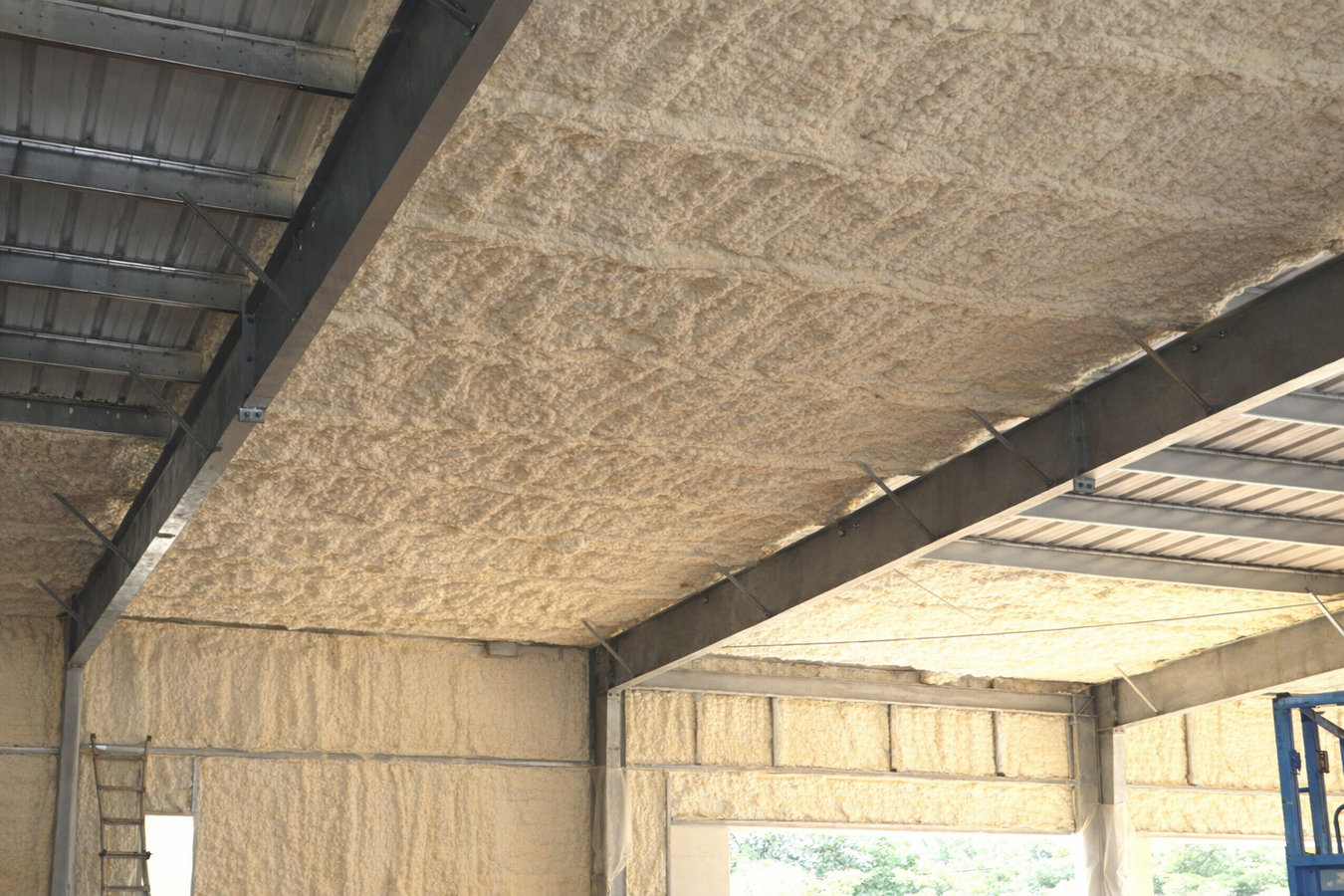
California City's commercial building stock includes pre-engineered metal structures and concrete tilt-up panels that require continuous insulation systems, not just cavity fill, to meet California Title 24 Part 6 minimums for Climate Zone 14. Under-insulated commercial roofs in this climate drive cooling costs to levels that make the payback on a proper insulation upgrade shorter than in most California markets. We design and install compliant systems for warehouses, shops, and light-industrial buildings throughout the city.
Many California City homes built in the 1960s and 1970s still have their original fiberglass batt insulation — thin, settled, and far below what is required today. Blown-in cellulose or fiberglass covers the entire attic floor, reaches into framing cavities that batts miss, and can be added over existing material without a complete tear-out when the substrate is still sound. It is the fastest way to bring an older desert home up to a level where the air conditioner is not fighting a losing battle all summer.
California City's intense solar radiation and dry desert air push through any gap in a building envelope. Closed-cell spray foam applied to roof decks, rim joists, or metal building wall panels seals and insulates in a single step, achieving both an air barrier and an R-value that does not degrade the way batt insulation does when it is compressed or left with gaps at the framing edges.
July high temperatures in California City regularly top 97 degrees Fahrenheit, and an under-insulated attic acts as a heat reservoir that keeps pumping warmth into living spaces even after sunset. Bringing attic insulation up to Title 24 minimums for this climate zone is the single highest-impact change most California City homeowners can make to lower monthly SCE electricity bills from May through October.
The Mojave Desert environment around California City produces dry, dusty air that presses through gaps around light fixtures, plumbing penetrations, and attic hatches. Sealing those pathways before adding insulation means you are not just slowing heat transfer — you are also reducing the fine desert dust that finds its way into living spaces on high-wind days when the surrounding terrain kicks up.
Our coverage extends west along the SR-14 and Highway 58 corridors to Rosamond, where many Edwards AFB households are based and insulation needs mirror those of California City across the same desert climate zone.
California City sits in the northern Antelope Valley at approximately 2,400 feet in the Mojave Desert. Average July highs reach 97 degrees Fahrenheit, and December nighttime temperatures average near freezing — a swing of more than 60 degrees between the hottest summer day and the coldest winter night. That range is not a statistic; it shows up directly on energy bills for any home or commercial building that is not properly insulated on both sides of the seasonal calendar.
The city's history as a planned community that never fully built out means a significant share of the housing stock dates to the 1960s and 1970s — decades before California adopted meaningful energy efficiency requirements. Those homes were built to standards that would not pass inspection today, and most have not had their insulation touched since original construction. In a climate where cooling costs are substantial from May through October, that gap between what the home has and what it needs translates directly into hundreds of dollars per year in avoidable energy costs.
Commercial buildings in and around California City face a different but equally urgent challenge. Pre-engineered metal buildings and concrete structures common to the area's light-industrial and defense-adjacent corridors have inherently poor thermal performance without continuous insulation. Title 24 Part 6 requires specific R-values for commercial roofs and walls in Climate Zone 14 that can only be achieved with properly designed and installed insulation systems — not just cavity fill between studs. The penalty for falling short is both a failed inspection and chronically high operating costs.
We pull permits for California City projects through the California City Community Development Department, not the Los Angeles County system — a distinction that matters because the city is incorporated within Kern County and has its own permit office and inspection schedule. Contractors unfamiliar with the area sometimes file with the wrong jurisdiction, which delays projects and creates title issues. We confirm the correct agency before every project.
California City is accessible from Lancaster and Palmdale via State Route 14 north to Mojave, then east on California City Boulevard into the residential grid. Properties here are widely spaced — many sit on lots measured in acres, not square feet — and the street grid extends far beyond the occupied residential core into undeveloped desert. Getting to a property at the outer edges of the city requires familiarity with the local street layout, which does not always resemble what navigation apps expect. The California City Central Park area near the original planned-city core has the densest residential concentration and is typically the most straightforward for scheduling multiple jobs in a single day.
We also regularly serve communities to the south and southwest, including Tehachapi, CA and Rosamond, CA, giving us consistent experience with the permit offices, climate zone requirements, and building stock throughout the Kern County high desert.
Call or submit the online form. We respond within one business day and ask a few questions about your property type, what you are experiencing, and which areas need attention — attic, crawl space, walls, or a commercial assembly — so we arrive prepared to assess the full scope.
A technician visits the property, measures existing insulation depth, identifies air leakage points, and evaluates the assembly type. For commercial projects, we confirm Title 24 requirements for the specific building type and occupancy class. You receive a written, itemized estimate before the visit ends — no charge, no obligation.
We file the required permits with the California City Community Development Department when the project scope requires them, then schedule installation. Most residential attic jobs complete in a single day. Commercial projects are staged to minimize disruption to building operations.
On completion we walk you through what was installed, confirm coverage meets the required R-value depth, and provide permit close-out documentation. For permitted projects, we coordinate the inspection with the city so the job is on record correctly.
We reply to every California City inquiry within one business day. The on-site estimate is written and itemized with no obligation to proceed. Call us directly or submit the form and we will confirm a visit time that works for your schedule.
(661) 450-6647Spray foam creates an air-tight thermal barrier that stops heat transfer and air infiltration in walls, attics, and crawl spaces.
Learn moreProper attic insulation reduces heat gain in summer and heat loss in winter, easing the load on your HVAC system year-round.
Learn moreBlown-in insulation fills irregular cavities and hard-to-reach spaces with a seamless layer of thermal protection.
Learn moreWhole-home insulation assessments and installations address every zone of heat loss to improve comfort and lower utility bills.
Learn moreOld, damaged, or contaminated insulation is safely extracted before new material is installed for maximum performance.
Learn moreInsulating the crawl space floor and rim joists keeps floors warmer, reduces moisture intrusion, and cuts energy costs.
Learn moreRetrofit and new-construction wall insulation controls heat flow and reduces noise transmission between interior spaces.
Learn moreAir sealing closes gaps, cracks, and penetrations that allow conditioned air to escape and outside air to enter your home.
Learn moreInsulating basement walls and rim joists prevents cold floors above and protects pipes from temperature extremes.
Learn moreClosed-cell spray foam delivers the highest R-value per inch and acts as both an air barrier and a vapor retarder.
Learn moreOpen-cell spray foam is a cost-effective choice for interior walls and attics where a vapor-permeable barrier is preferred.
Learn moreSealing attic bypasses before adding insulation prevents warm air from rising into the attic and greatly reduces energy waste.
Learn moreA heavy-duty vapor barrier on crawl space floors blocks ground moisture from entering the structure and damaging insulation.
Learn moreVapor barrier installation in walls and floors controls moisture movement to prevent mold growth and insulation degradation.
Learn moreRetrofit insulation upgrades existing homes with modern materials without the need for extensive demolition or reconstruction.
Learn moreCommercial insulation services cover warehouses, office buildings, and industrial facilities to meet code and reduce operating costs.
Learn moreServing these cities and communities.
Call or submit the form and a licensed insulation contractor will reach out within one business day to schedule your free estimate.