Loading...
Serving Palmdale, CA and surrounding areas(661) 450-6647
Palmdale Insulation is an insulation contractor serving Agua Dulce, CA with attic air sealing, crawl space insulation, and spray foam for large-lot ranch properties in the Sierra Pelona Mountains. We have completed jobs throughout the Agua Dulce community and reply to every inquiry within one business day.
Agua Dulce is an unincorporated community and census-designated place in northern Los Angeles County, situated in the Sierra Pelona Mountains at 2,526 feet. With a population of roughly 3,450 spread across 23 square miles, it is one of the lowest-density communities in the county. The name translates from Spanish as "Sweet Water," and the area has maintained that rural identity through a deliberate Community Standards District designed to preserve large-lot zoning, equestrian trails, and agricultural character.
Most properties here are multi-acre parcels — many zoned for horses — with homes that range from 1970s ranch-style builds to newer custom construction. Unlike the suburban tracts of Santa Clarita to the south, Agua Dulce homes often include private wells, septic systems, and outbuildings spread across spacious lots. The community sits northeast of Santa Clarita along State Route 14, adjacent to the Vasquez Rocks Natural Area Park, one of the most recognizable film locations in California. Nearby Acton, CA shares a similar high-desert rural character, and residents of both communities deal with the same wide seasonal temperature swings that make proper insulation essential year-round. To the south, Santa Clarita, CA marks the transition to denser suburban development.
At 2,526 feet, Agua Dulce attics reach extreme temperatures on summer afternoons. When gaps around light fixtures, plumbing chases, and wiring penetrations go unsealed, that heat pours directly into living spaces and keeps cooling systems running far longer than they should. Sealing those ceiling-plane breaches is the highest-return insulation upgrade available to most homeowners in this community.
Many older ranch homes in Agua Dulce sit on raised foundations with uninsulated or poorly insulated crawl spaces exposed to cold desert nights. Floors that feel cold even with the heat on are often a sign that the crawl space below is pulling warmth away from the living area. Properly insulating and vapor-sealing the crawl space brings floors up to temperature and protects the wood framing from seasonal moisture cycles.
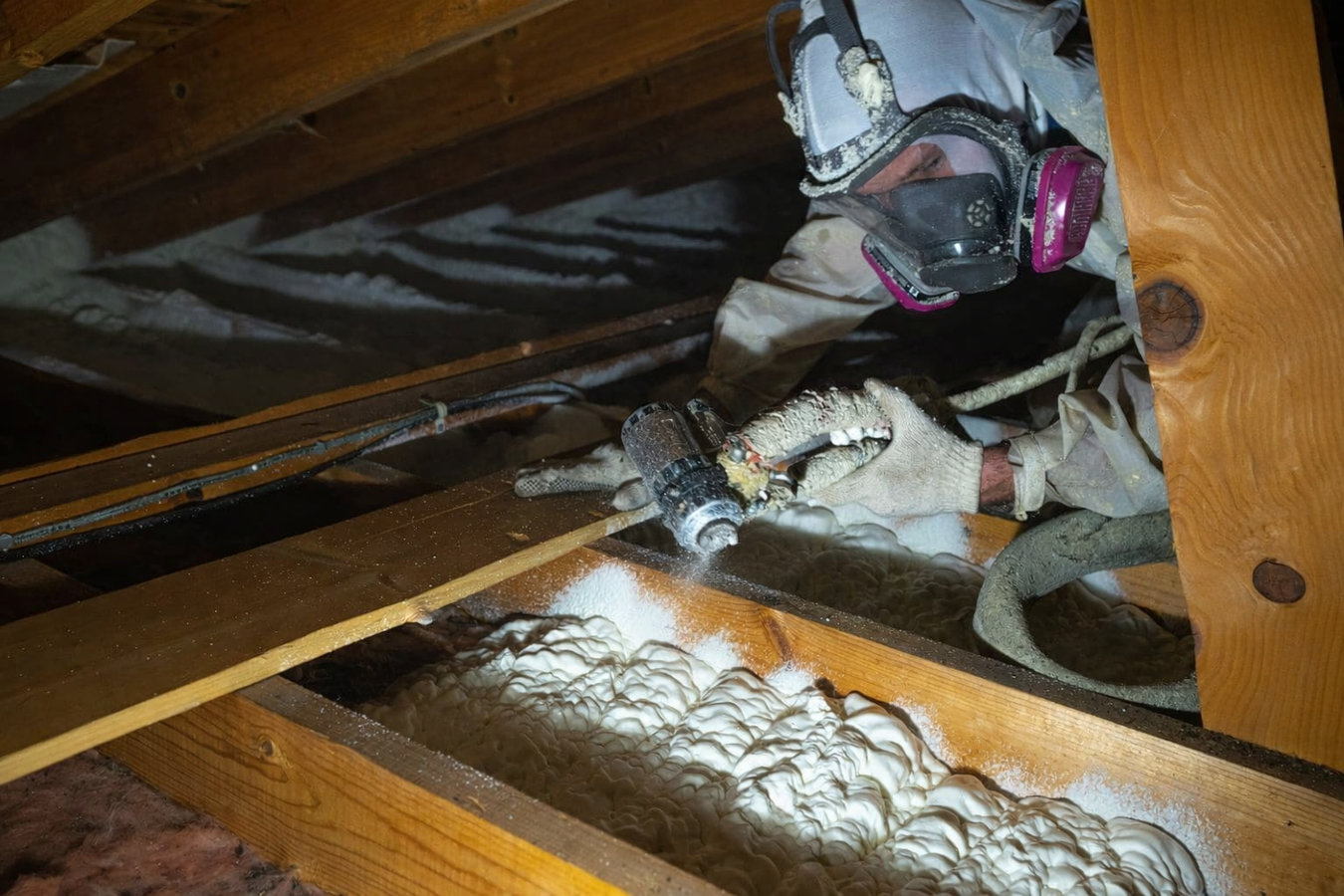
Custom-built and older ranch homes in Agua Dulce frequently have non-standard framing bays, vaulted ceilings, and additions that do not match the original structure. Spray foam fills irregular cavities completely and bonds to whatever surface it contacts, making it the right choice when standard batts cannot achieve full coverage around structural irregularities common in Agua Dulce's eclectic rural housing stock.
Homes built in the 1970s and 1980s across the Agua Dulce community were often insulated to standards well below California's current Title 24 requirements for high-desert elevations. Bringing attic insulation depth up to current code, following air sealing work, is the second step that locks in year-round comfort and reduces heating bills during the cold months when temperatures regularly drop below freezing at night.
Properties on private wells in Agua Dulce often have crawl spaces that see more ground moisture variation than they would in a city-served neighborhood. A heavy-duty vapor barrier installed across the crawl space floor keeps moisture from wicking into the subfloor framing and interacting with crawl space insulation, extending the life of both the structure and the insulation underneath.
The Sierra Pelona Mountains do not behave like the valley floor. Agua Dulce sits at 2,526 feet, and that elevation creates a climate that shifts dramatically between seasons and between day and night. Summer afternoons can push temperatures above 95 degrees Fahrenheit, while winter nights regularly drop below freezing. An attic here can hit 140 degrees or higher in July, and the same attic can hold temperatures well below 40 degrees on a January night.
Rural housing stock compounds those thermal demands. Many homes in Agua Dulce were built before California adopted its current energy code standards for high-desert climate zones. Ranch homes from the 1970s and 1980s commonly have R-11 or R-19 attic insulation where current Title 24 guidance requires R-38 or higher. Crawl spaces on those same homes often have no insulation at all on the floor cavity, which shows up as cold floors and high heating bills from October through March.
The low-density, large-lot character of Agua Dulce also means homes are more exposed. There are no neighboring structures blocking prevailing winds, and the terrain around Vasquez Rocks channels desert air through the community during high-wind events. Any gap in the building envelope — especially around recessed lights or plumbing stacks — becomes a direct pathway for outdoor air to enter the home and for conditioned air to escape.
Our crews pull permits for unincorporated Agua Dulce properties through the Los Angeles County Department of Public Works, not a city building department — a distinction that catches out-of-area contractors off guard and delays jobs when they file with the wrong office. We know this process and handle the permit paperwork so homeowners do not have to navigate the county system themselves.
Agua Dulce is accessible off State Route 14 via Escondido Canyon Road and Agua Dulce Canyon Road. Properties here tend to sit well back from the road, and some parcels near Agua Dulce Winery and the Vasquez Rocks Natural Area Park have long, unpaved access roads. We come prepared with the equipment needed to reach properties on these larger parcels rather than requiring the homeowner to haul materials or coordinate access.
We also serve neighboring communities including Littlerock, CA and Palmdale, CA, which gives us consistent familiarity with the regional permit offices, utility programs, and building code requirements that apply to properties across northern Los Angeles County.
Call or submit the online form and we will respond within one business day. We will ask a few questions about your home size and what you are noticing — cold floors, high bills, uneven temperatures — to scope the visit accurately before we drive out to your property.
A technician visits your property, inspects the attic, crawl space, or wall cavities in question, and measures what is there. You receive a written, itemized estimate before we leave. There is no charge for the assessment and no obligation to book.
Most Agua Dulce jobs complete in a single day. You do not need to leave the property, though we ask for clear access to the attic hatch or crawl space entry. Our crew handles all setup, work, and cleanup before leaving.
Before we leave we walk you through what was done, show you the coverage in the attic or crawl space, and confirm permit documentation if applicable. If anything is not right, we fix it before we go.
We reply to every Agua Dulce inquiry within one business day. The estimate is written, no-obligation, and based on a real on-site measurement — not a ballpark figure over the phone. Submit the form or call us directly and we will take it from there.
(661) 450-6647Spray foam creates an air-tight thermal barrier that stops heat transfer and air infiltration in walls, attics, and crawl spaces.
Learn moreProper attic insulation reduces heat gain in summer and heat loss in winter, easing the load on your HVAC system year-round.
Learn moreBlown-in insulation fills irregular cavities and hard-to-reach spaces with a seamless layer of thermal protection.
Learn moreWhole-home insulation assessments and installations address every zone of heat loss to improve comfort and lower utility bills.
Learn moreOld, damaged, or contaminated insulation is safely extracted before new material is installed for maximum performance.
Learn moreInsulating the crawl space floor and rim joists keeps floors warmer, reduces moisture intrusion, and cuts energy costs.
Learn moreRetrofit and new-construction wall insulation controls heat flow and reduces noise transmission between interior spaces.
Learn moreAir sealing closes gaps, cracks, and penetrations that allow conditioned air to escape and outside air to enter your home.
Learn moreInsulating basement walls and rim joists prevents cold floors above and protects pipes from temperature extremes.
Learn moreClosed-cell spray foam delivers the highest R-value per inch and acts as both an air barrier and a vapor retarder.
Learn moreOpen-cell spray foam is a cost-effective choice for interior walls and attics where a vapor-permeable barrier is preferred.
Learn moreSealing attic bypasses before adding insulation prevents warm air from rising into the attic and greatly reduces energy waste.
Learn moreA heavy-duty vapor barrier on crawl space floors blocks ground moisture from entering the structure and damaging insulation.
Learn moreVapor barrier installation in walls and floors controls moisture movement to prevent mold growth and insulation degradation.
Learn moreRetrofit insulation upgrades existing homes with modern materials without the need for extensive demolition or reconstruction.
Learn moreCommercial insulation services cover warehouses, office buildings, and industrial facilities to meet code and reduce operating costs.
Learn moreServing these cities and communities.
Call or submit the form and a licensed insulation contractor will be in touch within one business day.