Home Insulation
A whole-home insulation assessment finds every weak spot - not just the attic - so your comfort and energy bills improve across the board.
Learn moreServing Palmdale, CA and surrounding areas. (661) 450-6647
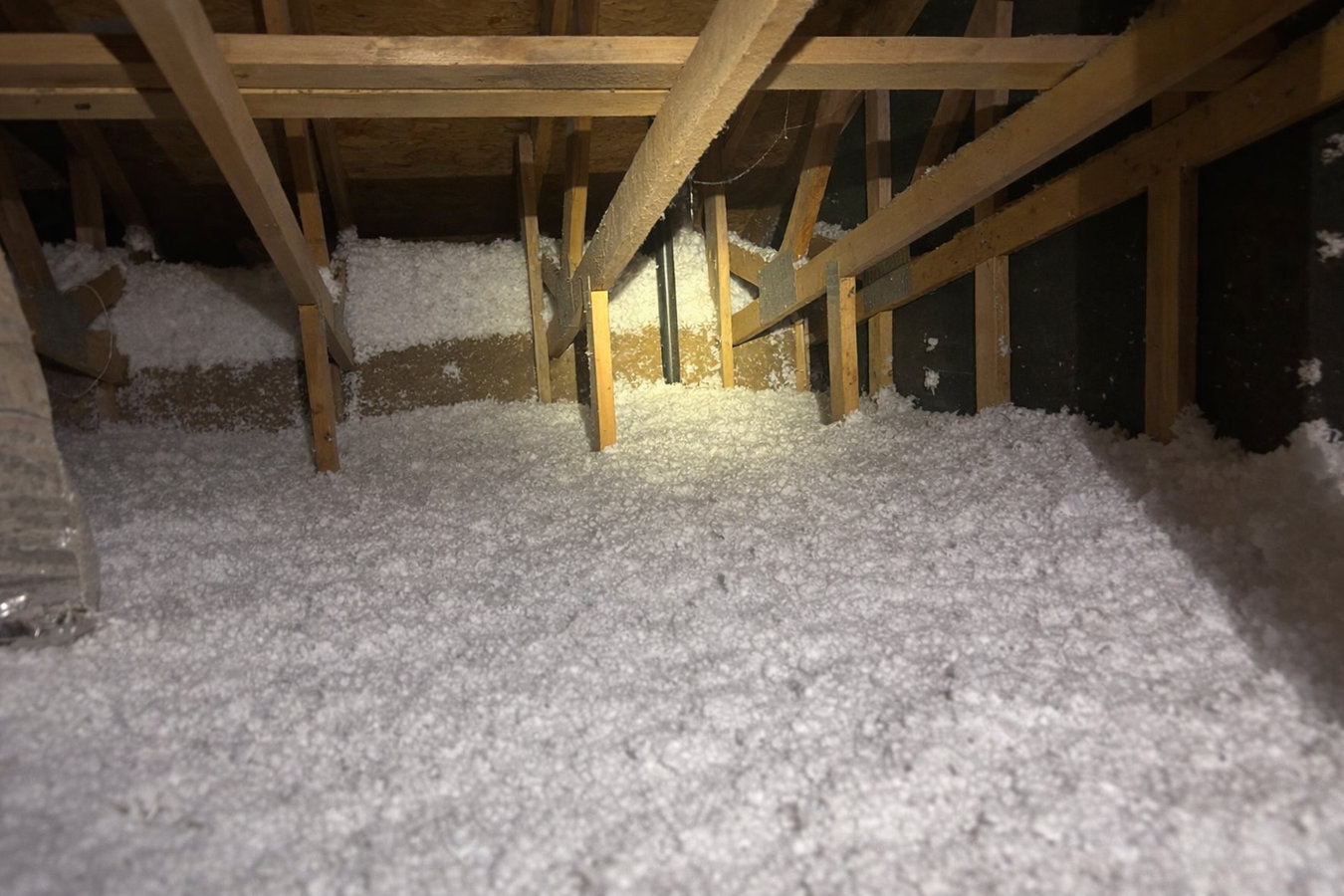
Loose-fill insulation covers every corner batts miss. Stop the heat from pouring through your attic and start seeing it on your energy bill.
Blown-in insulation in Palmdale fills your attic floor with loose fiberglass or cellulose insulation that packs into corners and gaps that rigid batts cannot reach - most jobs on a single-story home take two to four hours and require no structural changes.
Palmdale sits in the high desert at nearly 2,700 feet. Summer attic temperatures can hit 150°F. If your attic floor has thin or patchy coverage, that heat radiates straight down into your living space no matter how hard your air conditioner works. Blown-in material creates a continuous, even layer that closes those gaps.
Many homeowners pair blown-in coverage with whole-home insulation to address walls and crawl spaces in the same project. If you are starting with just the attic, blown-in is typically the highest-return area to address first.
If rooms near the ceiling are noticeably hotter than the rest of your house on Palmdale's triple-digit days, the attic is the first place to look. An under-insulated attic in the Antelope Valley can reach 150°F and act as a radiant heater pointed straight at your ceiling. Quick self-check: peek into your attic - if you can see the wooden joists above the insulation, you almost certainly need more coverage.
If your cooling costs climb sharply from June through September and seem out of proportion to your neighbors' bills, your air conditioner is compensating for heat pouring in through the ceiling. A well-insulated attic buffers the scorching outdoor air, reducing how hard your system has to run. If the bills feel wrong, insulation is one of the first things worth checking.
Many of Palmdale's tract homes from the 1980s and 1990s were built with insulation levels that met the code of that era - standards well below what California now recommends for this climate. If you've lived in your home for years without any insulation work, there's a reasonable chance you're running on an undersized layer. This is especially true if you bought the home and have no records of energy upgrades.
Palmdale winters regularly push overnight lows below freezing, and if you feel cold air near your ceiling or notice your home takes a long time to warm up on cold mornings, heat is escaping through the attic. The same gaps that let warmth out in winter let heat in during summer - insulation fixes both directions at once.
We install blown-in insulation in attics, walls, and enclosed cavities across Palmdale and the surrounding Antelope Valley. For attic jobs, we always assess what is currently there, seal air leaks first, and then blow material to the depth your home needs for this climate. Skipping the air-sealing step - which some contractors do - means you get a fraction of the energy savings you paid for.
If your home needs attention beyond the attic, we can pair blown-in coverage with targeted attic insulation work or a complete whole-home insulation assessment that covers walls, crawl spaces, and every other area contributing to heat gain or heat loss.
Every job includes depth markers left across the attic floor so you can verify the coverage yourself after we leave. You should not have to take our word for it.
Best for homeowners who want to address the single biggest source of heat gain first.
Suited for older homes where wall insulation was never upgraded or was installed incorrectly.
The right approach for homes where gaps around fixtures, hatches, and penetrations are undermining existing insulation.
For homes where existing insulation is too thin, compressed, or damaged to build on effectively.
Palmdale's high-desert climate is more demanding than most of Southern California. Summer highs regularly exceed 100°F and sometimes push past 110°F, while winter nights regularly drop below freezing from December through February. That dual-direction stress means your insulation has to work hard year-round - not just in summer. The California energy standards that apply to Palmdale's climate zone call for significantly more attic insulation than what is required in coastal cities like Los Angeles or San Diego.
A large share of Palmdale's housing stock was built during the rapid growth years of the 1980s and 1990s, when insulation requirements were much lower than they are today. Many of those homes were built with just a few inches of material - enough to pass the code of that era, but well below what is recommended now. If your home was built before 2000 and has never had insulation work done, the attic is almost certainly under-performing by current California standards. You can learn more about energy requirements from the California Energy Commission's Title 24 Building Standards.
We serve the full Antelope Valley, including Lancaster, Victorville, and Apple Valley. If you are in any of these high-desert communities, the same climate conditions apply - your home needs insulation sized for this environment.
We respond within 1 business day. You tell us your home's size and what's prompting the call - we ask a few basic questions to understand whether blown-in, air sealing, or a combination makes sense before scheduling anything.
We access your attic through the existing hatch - usually in a hallway or closet - and measure the current insulation depth. We identify air leaks around fixtures and penetrations. This visit takes 30 to 60 minutes and is free with no obligation.
You receive a written estimate specifying the material type, final depth, and total cost before any commitment. We explain whether the proposal meets California's current requirements for Palmdale's climate zone and whether the materials qualify for the federal tax credit.
On install day, we seal air gaps first, then run the blowing hose into the attic. For most Palmdale homes this takes two to four hours. We leave depth markers across the attic floor and walk you through the finished work before we leave.
We respond within 1 business day. There is no obligation to move forward. After you submit, someone from our office will call you to schedule a free on-site assessment at a time that works for you.
(661) 450-6647We place visible depth gauges across your attic floor so you can verify the coverage yourself with a flashlight. You should never have to take a contractor's word that the work was done correctly.
We seal gaps around recessed lights, plumbing penetrations, and attic hatches before blowing in material. Contractors who skip this step deliver a fraction of the energy savings - and the lower price reflects that shortcut.
We specify insulation depths that meet current California energy standards for this desert climate, not the coastal minimums. For Palmdale homes, that distinction matters every month on your utility bill.
We use qualifying materials and provide the manufacturer's certification with every job so you can claim the federal energy efficiency tax credit without scrambling for paperwork at tax time.
Every one of these points addresses a specific concern we hear from Palmdale homeowners: did the job actually get done right, and did I get what I paid for? Our process is designed to answer both questions before you have to ask. The North American Insulation Manufacturers Association publishes installation standards that guide how every job should be completed.
A whole-home insulation assessment finds every weak spot - not just the attic - so your comfort and energy bills improve across the board.
Learn moreTargeted attic insulation addresses the single biggest source of heat gain in most Palmdale homes before it radiates down into living spaces.
Learn moreCall today for a free on-site estimate - most Palmdale attic jobs are completed in a single visit.