Vapor Barrier Installation
Full vapor barrier installation services covering crawl spaces, below-slab, and wall applications for complete moisture control.
Learn moreServing Palmdale, CA and surrounding areas. (661) 450-6647
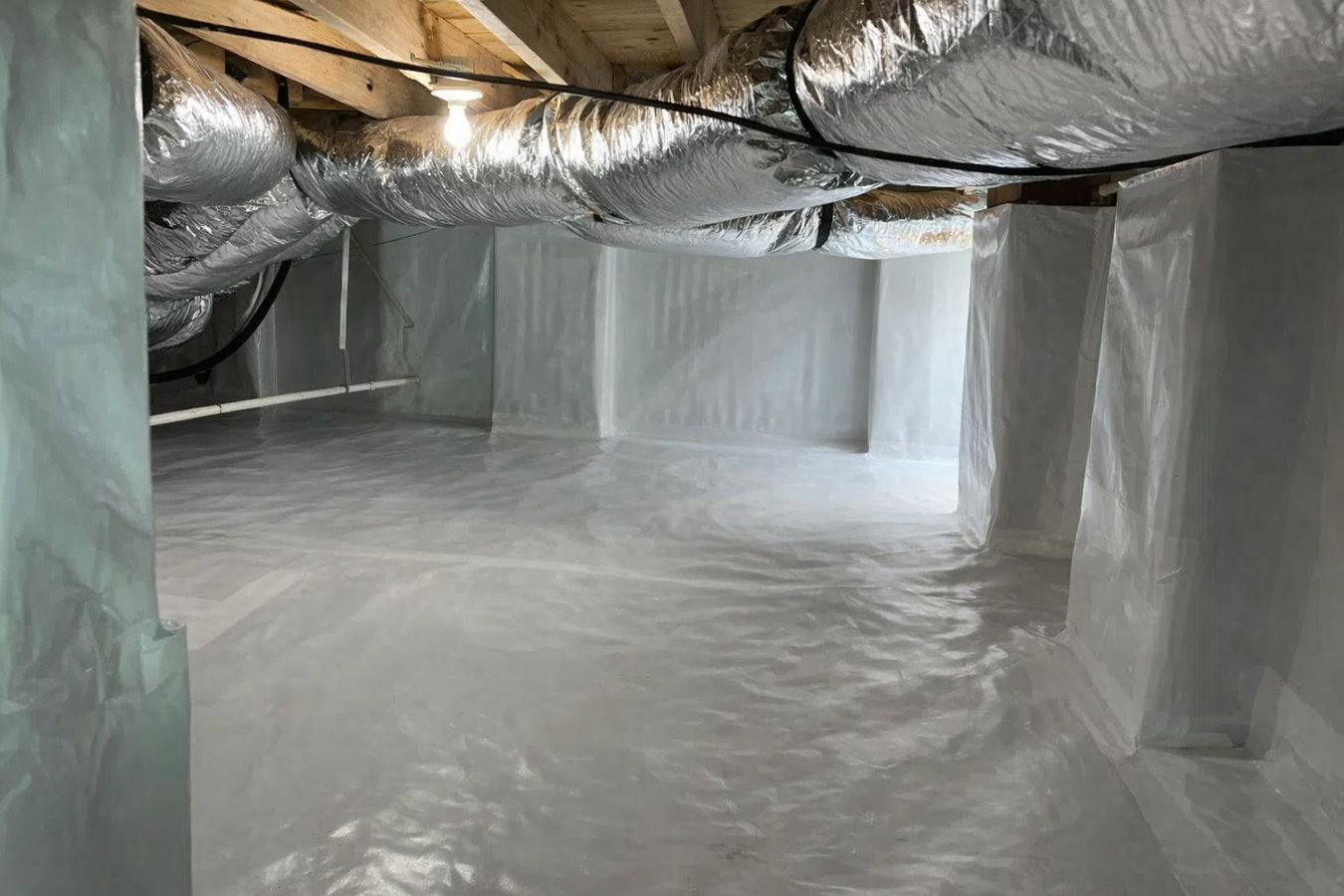
Palmdale winters push moisture up through exposed crawl space soil and into your floors and framing. A properly installed vapor barrier stops it at the source.
A crawl space vapor barrier in Palmdale is a thick plastic sheet laid across the exposed soil beneath your home to block ground moisture from rising into your floors and framing - most installations are completed in a single day without any disruption to your household.
Without it, moisture from Palmdale's clay-heavy soil works its way upward every time the ground gets wet from winter rains. That moisture softens wood, encourages mold, and creates the musty smell that homeowners often notice when the heat kicks on. Many Palmdale homes built before 2000 have original vapor barriers that are now cracked or missing entirely.
A vapor barrier works best when paired with proper crawl space insulation above it. If you are not sure what your crawl space has or needs, we can assess both during the same visit and give you a clear picture before you commit to anything.
If spots on your floor feel noticeably colder than the rest of the room on Palmdale winter mornings, ground moisture may be affecting the insulation beneath your feet. Soft or slightly springy spots in wood floors are more serious - they can mean the wood itself has absorbed enough moisture to begin weakening. Both can be felt without going under the house.
A musty or earthy smell that gets stronger when your heating system kicks on is a classic sign of moisture in the crawl space. Your HVAC can pull air from below your floors and distribute it through your home, carrying that damp smell with it. In Palmdale, this often becomes noticeable in late winter or early spring after a wet stretch.
If anyone has ever looked into your crawl space and noticed water droplets on pipes, dark staining on wood beams, or rusty metal fittings, that is moisture doing visible damage. You do not need to be an expert to recognize wet-looking wood - those are clear signs that ground moisture is active and getting into your structure.
Palmdale's housing boom ran from the 1970s through the 1990s, and many homes from that era have original vapor barriers that are now degraded or missing. If you have owned your home for years and never had anyone inspect the crawl space, there is a real chance the barrier - if there ever was one - is no longer doing its job.
We install heavy-duty polyethylene vapor barriers across the full floor of your crawl space, overlapping seams, taping joints, and running the material up the foundation walls at the perimeter. We do not use thin sheeting that tears easily - quality installation uses material thick enough to stay intact when workers move across it and to resist the bumps and shifts that happen over time in a crawl space.
If your crawl space has old, failed sheeting that needs removal first, we handle that as part of the project. Many Palmdale homeowners find that the original material from the 1980s or 1990s is in poor condition and needs to come out before new sheeting goes down. A clean install on a prepared surface lasts significantly longer than new material laid over degraded old plastic. We also assess whether any adjacent work, such as vapor barrier installation in other areas of the home or full crawl space insulation, would improve the overall performance of the project.
Every installation includes a final walkthrough - we show you photos or invite you to view the finished work directly so you can confirm that every inch of ground is covered and every seam is sealed before we leave.
Suited for homes with no barrier or one that has completely failed, starting fresh with properly rated material.
Best for homes with existing but degraded sheeting from the 1980s or 1990s that needs removal before new material goes in.
For homes where most of the existing barrier is in good condition but specific sections have torn or pulled away from the walls.
Addresses both moisture control and thermal performance in one project, suited for homes with multiple crawl space deficiencies.
Palmdale sits in the high desert at roughly 2,700 feet, and most people assume that means moisture is never a problem. The reality is more complicated. The Antelope Valley gets real winter rainfall, and its clay-heavy soils absorb that water and release it slowly over weeks. The ground beneath many Palmdale homes stays damp long after a storm has passed, continuing to push moisture upward into floor joists and insulation. A vapor barrier is the most direct way to interrupt that process before it causes lasting damage.
The wildfire smoke and dust events that are a regular part of life in the Antelope Valley are another reason a properly sealed crawl space matters here. An unsealed space lets outdoor air, including fine particles, enter your home through gaps in the floor. Homeowners in Lancaster and Apple Valley face the same combination of clay soil and poor air quality days as Palmdale. Sealing the crawl space reduces one of the hidden pathways for that outdoor air, which matters more here than in most other parts of Southern California.
Los Angeles County building jurisdiction applies to most work in Palmdale. A straightforward vapor barrier replacement typically does not require a permit, but if the project involves adding insulation, sealing vents, or encapsulating the full crawl space, a permit may be required. The U.S. Department of Energy recommends addressing crawl space moisture as a priority in any home energy upgrade. Homeowners in Victorville and other nearby high desert communities face similar soil and climate conditions and the same reasons to act before the next wet season.
We ask a few basic questions - roughly how big your home is and whether you have noticed any specific problems like musty smells or soft floors. Most inquiries get a response within one business day, and we can usually schedule an on-site visit within a few days.
We physically enter your crawl space to assess the condition of the existing barrier, the ground, the clearance, and any moisture signs. This visit is free and takes about 30 to 45 minutes. You will know exactly what we find before we ask you to commit to anything.
After the assessment you get a written quote covering materials and labor, with the material thickness specified so you can compare it accurately against other bids. If old material needs to come out first, that is included in the scope so there are no surprises on installation day.
The crew lays the new barrier across the entire crawl space floor, tapes every seam, and runs the material up the foundation walls. Once the work is done, we walk you through the finished job or show you photos so you can confirm coverage before we leave.
Free estimate. No pressure. We tell you exactly what we find under your home before you commit to anything.
(661) 450-6647Every job we take in Palmdale comes with a written estimate up front and a documented record when we finish. You know exactly what material went in and what it cost - not just a handshake promise.
We work regularly in Palmdale and understand how the clay soils in the Antelope Valley hold moisture after winter rains. That local experience changes how we assess a crawl space and what we recommend - it is different from coastal Southern California conditions, and we treat it that way.
We have completed jobs across Palmdale's established neighborhoods and newer subdivisions on the city's edges. Homes here vary by decade, and we know what to expect from 1980s construction versus 2010s builds. That range of experience means fewer surprises on your job.
We show you the completed crawl space - in person or in photos - before we consider the job done. You should be able to see that every inch of ground is covered and every seam is sealed. If you have questions about what you are looking at, we answer them on the spot.
Vapor barrier work is unglamorous, but the consequences of doing it poorly show up slowly and cost significantly more to fix later. We take the installation details - seam overlap, wall coverage, material thickness - seriously because those are exactly the details that determine whether your barrier lasts 5 years or 20. The EPA is clear that moisture control in crawl spaces is one of the most effective steps a homeowner can take to prevent mold and structural damage.
Full vapor barrier installation services covering crawl spaces, below-slab, and wall applications for complete moisture control.
Learn morePair your new vapor barrier with crawl space insulation to address both moisture and thermal performance in one project.
Learn morePalmdale's rainy season comes every year - call now for a free crawl space assessment before the next one hits.