Attic air sealing
Close the gaps in your attic floor that let conditioned air escape and outdoor air infiltrate - the first step before adding any insulation.
Learn moreServing Palmdale, CA and surrounding areas. (661) 450-6647
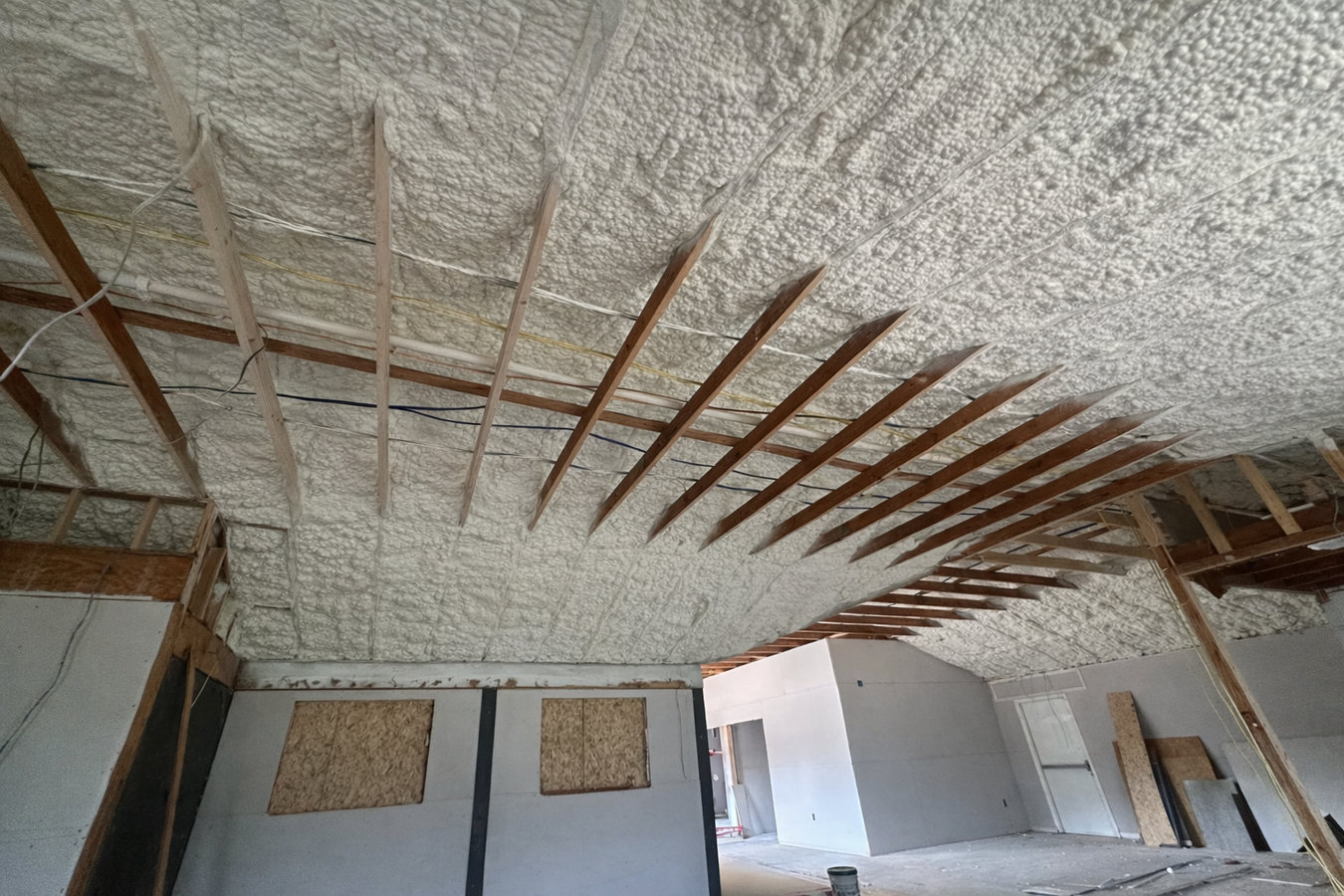
High desert heat doesn't just push through surfaces - it sneaks in through every gap around framing, pipes, and fixtures. Open-cell foam insulates and seals in one step, so your AC finally has a fighting chance.
Open cell spray foam insulation in Palmdale, CA is a soft spray-applied material that expands to fill every gap and corner in your attic, walls, or crawl space - most residential jobs are completed in a single day and homeowners typically notice a difference in comfort within the first week.
Unlike fiberglass batts that sit loosely between framing members, open-cell foam conforms to whatever shape it meets - filling the irregular gaps around pipes, electrical boxes, and framing that batts always leave behind. In Palmdale's high desert climate, where temperatures can swing 40 degrees between afternoon and midnight, those gaps are a major source of heat gain and air infiltration. The foam moves with the structure rather than cracking or pulling away from those daily cycles.
Open-cell foam is often paired with other improvements. Homeowners who want to address the full thermal envelope typically combine it with attic air sealing or spray foam insulation in areas that benefit from a higher R-value.
If your air conditioner seems to run all day during Palmdale summers without ever getting the house truly comfortable, the problem is often not the equipment - it is the home's envelope. Heat is entering faster than the system can remove it, which points to inadequate insulation or air leaks in the attic or walls. In Palmdale's triple-digit summers, this is one of the most common reasons homeowners look into insulation upgrades.
Palmdale's desert location means fine dust and particulates are constantly in the outdoor air. If your home has air leaks, that dust finds its way in through gaps around light fixtures, outlets, attic hatches, and wall penetrations. If you are dusting more than you think you should be, or notice a haze on windy days, your home may be pulling in more outside air than it should.
A moderate increase in summer electricity costs is normal in the Antelope Valley. But if your bills are climbing dramatically, or noticeably higher than neighbors with similar-sized homes, that gap often comes down to how well the home is sealed and insulated. Comparing your summer bills to your winter bills can give a rough sense of how hard your cooling system is working.
Heat radiates down from a poorly insulated attic, making upper-floor rooms uncomfortable even when the rest of the house is cool. If you find yourself closing off certain rooms in summer or running a separate window unit, the attic insulation is likely the culprit. This is especially common in Palmdale homes built in the 1980s and 1990s, where attic insulation was often installed at minimal levels.
Palmdale Insulation sprays open-cell foam in attics, crawl spaces, and wall cavities across the Antelope Valley. In an attic, the foam is applied to the underside of the roof deck or across the attic floor - creating a complete air and thermal barrier rather than a layer that stops at the framing. For crawl spaces, open-cell foam lines the rim joists and band boards where conditioned air most commonly escapes. For walls in an existing home, contractors drill small holes and inject foam into the cavity, then patch and finish.
Every open-cell foam project begins with a site assessment so the crew understands what is already in place, where the primary air-leakage pathways are, and what thickness is needed to meet the performance target for this climate zone. That assessment shapes the written quote - you will see the exact square footage and depth before a single can is opened.
For homes where the existing insulation is damaged or contaminated, we combine removal and replacement in a single visit. And for homeowners whose primary concern is controlling air movement rather than adding insulation depth, we can discuss whether attic air sealing or a full spray foam insulation approach is the better fit for their budget and goals.
Applied to the underside of the roof deck or across the attic floor - ideal for homes where heat radiates down from an uninsulated or under-insulated attic.
Seals rim joists, band boards, and floor framing from below - a good fit for homes with unconditioned crawl spaces that lose heat in winter.
Drilled and injected into finished wall cavities without tearing out drywall - suited for targeted problem areas in older Palmdale homes.
Full removal of degraded, pest-damaged, or smoke-contaminated material followed immediately by fresh open-cell foam installation.
Palmdale sits at roughly 2,700 feet in the Antelope Valley, where summer highs regularly exceed 100°F and overnight lows can drop 35 to 40 degrees below that peak. That daily thermal cycling puts constant stress on building materials - wood framing, caulk, and rigid insulation products crack and pull away over time. Open-cell foam's flexible structure moves with the building rather than against it, which is why it holds its seal through years of these daily cycles in a way that older batt insulation cannot. Homes in Palmdale also face wildfire smoke and fine Mojave Desert dust as seasonal air-quality concerns; sealing those infiltration pathways keeps that outdoor air out of your living space.
A large share of Palmdale's housing was built during the 1980s and 1990s growth surge. Those homes were insulated to the standards of the time, which are well below what California now requires for this climate zone. Many have never been upgraded - meaning conditioned air has been leaking through the same gaps for 30 or 40 years. Open-cell foam is well suited for these retrofits because it can be injected into existing wall cavities and applied in attic spaces without major demolition. We serve homeowners throughout Palmdale and in surrounding communities, including Lancaster and Victorville.
California's energy standards set insulation minimums for permitted projects, and we make sure your project meets those requirements. Homeowners may also be eligible for rebates through Southern California Edison and SoCalGas, and the federal energy efficiency tax credit may apply to your project - ask before signing any contract, since some programs require pre-approval.
We respond within 1 business day. The first conversation is brief - we ask which areas you want insulated, your home's age, and what is prompting the call. No commitment is required to get an estimate.
A technician walks the areas to be insulated, measures square footage, notes existing conditions, and checks access points for the spray equipment. This visit is where you get a clear picture of what the job involves - and it costs nothing.
You receive an itemized written quote that states the area covered, the foam thickness, and the total cost. A trustworthy contractor explains why a particular thickness is recommended - not just hands you a number.
The crew arrives with a spray rig, masks off surfaces that should not receive foam, and sprays in passes until the target thickness is reached. The foam firms up within minutes. Most Palmdale homes complete in a single day, and the crew handles cleanup before leaving.
Free estimate, no pressure. Most Palmdale homes are assessed and quoted within one visit. We reply within 1 business day.
(661) 450-6647Our crews specialize in C-2 insulation and acoustical work, and they handle open-cell foam every week. We coordinate any permits your job needs, work to California's current standards, and hand you a documented record of the job when we finish.
We work in Palmdale and the surrounding high desert communities every week. The combination of 100-degree summers, cold winter nights, and Mojave dust shapes every recommendation we make - because a spec sheet from a coastal contractor does not account for what this climate actually does to a building.
We do not quote open-cell foam jobs over the phone. Every estimate follows an in-person assessment and arrives in writing with area, thickness, and total cost broken out. That written record protects you and gives you something to compare against any other bid you receive.
Southern California Edison serves Palmdale, and we know which rebate programs are currently active and which projects qualify. We walk every customer through available incentives before they sign - because leaving money on the table is not a good outcome for anyone. The federal energy efficiency tax credit may also apply to your project.
Every one of these points comes back to the same thing: you should know exactly what you are getting, what it will cost, and what you can recover through rebates before any work begins. That is how we approach every job in Palmdale.
The Spray Polyurethane Foam Alliance is a good starting point if you want independent information about spray foam standards and installation.
Close the gaps in your attic floor that let conditioned air escape and outdoor air infiltrate - the first step before adding any insulation.
Learn moreHigher-density spray foam options for applications where maximum R-value or a moisture barrier is the priority.
Learn moreSummer heat season is coming - schedule your assessment now and lock in your installation date before the calendar fills.