Palmdale Insulation serves Santa Clarita, CA with retrofit insulation, attic upgrades, and air sealing for homes across Valencia, Newhall, Saugus, and Canyon Country. 4+ years working the Santa Clarita Valley means our crews understand the range of construction eras here — from pre-incorporation Newhall bungalows to Valencia master-planned tracts to newer hillside builds above the 14 Freeway. We reply within one business day and provide written estimates at no charge.

Santa Clarita is the third-largest city in Los Angeles County, with a 2020 census population of 228,673 spread across 70 square miles in the Santa Clarita Valley along the Santa Clara River. It incorporated in 1987 by merging four distinct communities — Valencia, Canyon Country, Newhall, and Saugus — each of which retains its own residential character today. Newhall is the oldest, with a walkable historic main street and mid-century housing stock. Valencia grew as a master-planned community with newer planned tracts. Canyon Country and Saugus climb into hillside terrain east and south of the valley floor.
The city sits at roughly 1,100 to 1,700 feet in elevation, with Canyon Country neighborhoods pushing above 2,000 feet. That elevation, combined with the valley's warm, dry climate, creates wide daily temperature swings that residential insulation has to manage in both directions. The William S. Hart Museum and Park in Newhall — a 265-acre county park centered on Hart's Spanish Colonial Revival hilltop mansion — marks one of the city's oldest cultural anchors, sitting in an area where the oldest residential construction dates to the early 20th century.
For property owners in Canyon Country specifically, the hillside terrain and older construction profile create insulation needs that differ from the valley-floor tracts. Our Canyon Country service area page covers those details, while this page addresses Santa Clarita broadly. Neighboring Acton to the northeast sits at even higher elevation with a distinctly rural housing profile.
Santa Clarita's four original communities were built across several decades, and each left a different insulation baseline. Retrofit insulation addresses existing homes without major demolition — whether that means blowing in attic coverage above pre-1990 Newhall bungalows, dense-packing wall cavities in older Saugus ranch homes, or topping up Valencia tracts where original insulation has settled below its labeled R-value over 25 years of use.
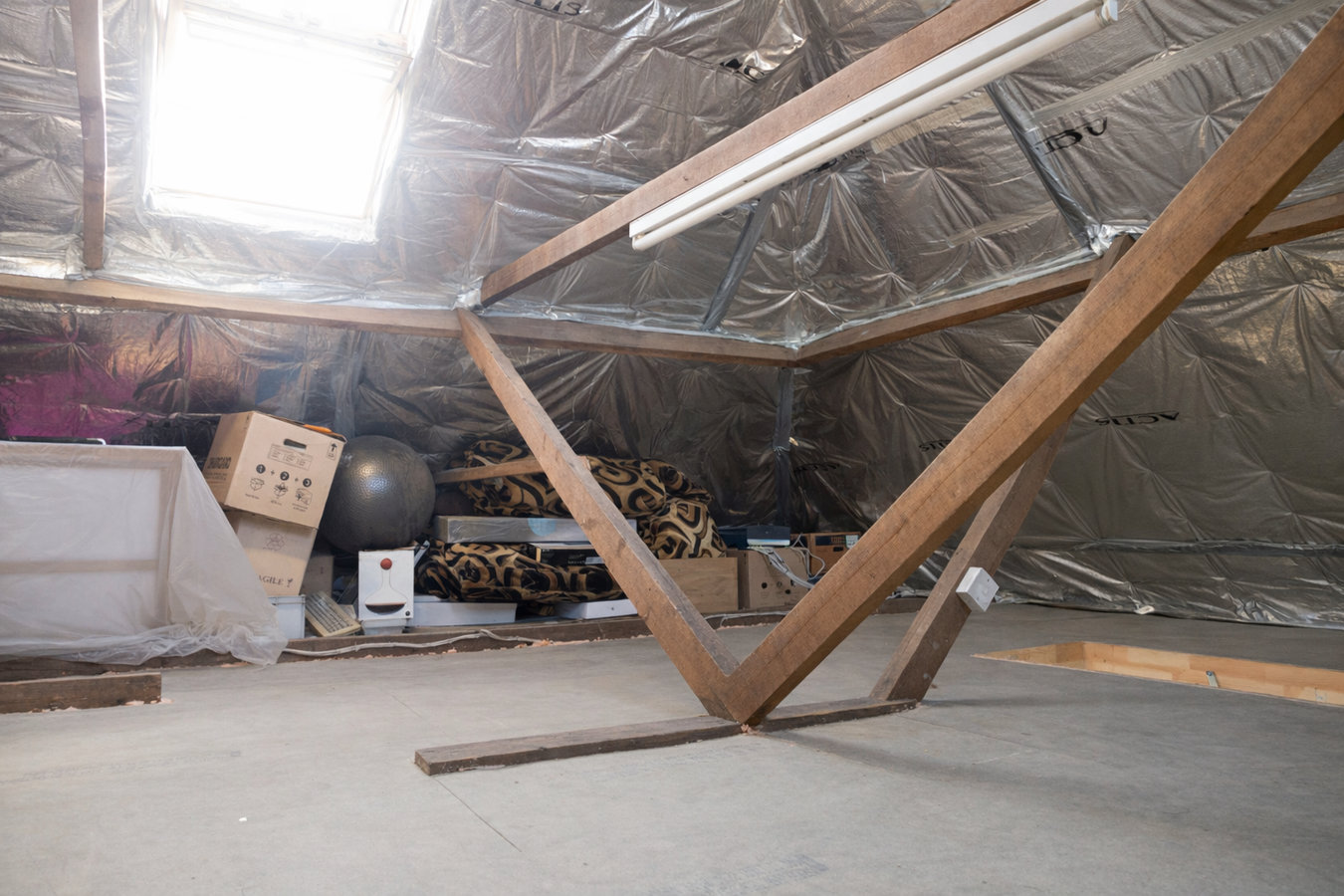
Santa Clarita's summer attic temperatures regularly exceed 140 to 150 degrees Fahrenheit on clear days. A home with R-19 or less in the attic — the standard when many Newhall and Saugus homes were built — transfers a significant portion of that heat load into the living space, running up cooling costs from May through October. Bringing the attic to R-38 or higher cuts that heat transfer substantially and is typically the single highest-return insulation improvement for this climate.
Adding insulation depth without sealing the ceiling plane first reduces heat conduction but leaves air infiltration pathways open. In Santa Clarita's older neighborhoods especially, gaps around recessed lights, top plates, and plumbing chases let conditioned air escape at a rate that surprises most homeowners when they see it quantified. Air sealing those penetrations before blowing in new material is how an insulation upgrade goes from modest to substantial on the utility bill.
Many homes in Newhall and older Saugus subdivisions have little or no wall cavity insulation — standard practice before the 1978 California energy code took effect. Dense-pack blown-in insulation fills existing wall cavities through small access holes in the exterior without requiring drywall removal, restoring thermal resistance to walls that have been losing heat all winter and absorbing it all summer.
For hillside Canyon Country homes and newer construction where air sealing and insulation need to be addressed together in a single application, spray foam is the most effective option. Closed-cell foam also adds structural rigidity — relevant in this seismic zone, where the 1994 Northridge earthquake affected structures across the Santa Clarita Valley.
Canyon Country is part of Santa Clarita but has its own housing profile — hillside terrain above 2,000 feet, older construction, and insulation needs that differ from valley-floor Valencia tracts. Our Canyon Country service area page covers those details specifically for homeowners in that part of the city.
The Santa Clarita Valley is classified as California Climate Zone 14, a warm, inland climate zone with hot summers, moderate winters, and low humidity — conditions that demand insulation performing well in both directions. The valley sits at a higher elevation than the San Fernando Valley floor, which means cleaner, cooler air at night but intense daytime solar gain in summer. Most homes here run air conditioning from late May through early October, and the attic is the primary pathway for that heat load to enter the living space.
The city's varied housing stock creates different starting points. Valencia's planned communities from the 1990s and early 2000s were built to the energy codes of that era — better than Newhall's mid-century stock, but often still below the R-38 to R-49 range currently recommended. Newhall homes from the 1950s and 1960s routinely have R-11 or lower in the attic and empty wall cavities. Canyon Country hillside construction adds another variable: homes that step down a slope have multiple attic levels and complex air sealing requirements that a flat-site job does not.
Santa Clarita also sits in an active seismic zone. The 1971 San Fernando earthquake and the 1994 Northridge earthquake both affected structures across the valley, and subsequent settlement can open gaps at top plates and ceiling penetrations that were tight at original construction. These post-seismic infiltration pathways are easy to overlook but show up clearly in air sealing assessments.
We file permits through the City of Santa Clarita Building and Safety Division for work in the incorporated city limits, which covers Valencia, Newhall, Saugus, and the core of Canyon Country. This matters because Santa Clarita has its own municipal code and inspection schedule, separate from Los Angeles County — a distinction that catches some contractors unfamiliar with the jurisdiction. We have worked with this office on both residential insulation projects and spray foam applications that required a pre-work inspection.
The city's geography splits naturally into the valley floor — centered on the Interstate 5 and Highway 14 interchange at the Newhall Pass — and the higher terrain that surrounds it. Most of our Santa Clarita jobs are in the residential corridors off Bouquet Canyon Road, Whites Canyon Road, and Sierra Highway, which connect the valley floor neighborhoods to the hillside subdivisions above. Six Flags Magic Mountain sits at the city's southwestern edge near the I-5, and the commercial density around it is a useful reference point for homeowners describing their neighborhood's location when they call.
We also serve Agua Dulce to the northeast and Lake Los Angeles further out on the Antelope Valley side, where housing profiles and permit processes shift entirely from the Santa Clarita municipal context.
Call or submit through the estimate form. We respond within one business day. We ask about the home's neighborhood, age, and the specific issue you are dealing with — high bills, uncomfortable rooms, or a planned upgrade — before scheduling a site visit.
We visit your Santa Clarita home to measure the attic, inspect existing insulation depth and condition, and assess air sealing needs at the ceiling plane. The written estimate is itemized with no-obligation pricing. For retrofit wall insulation projects, we also assess exterior wall accessibility at this visit.
If your project scope requires a City of Santa Clarita building permit, we handle the filing and coordinate inspection scheduling. Most straightforward attic insulation top-ups do not require a permit; spray foam and conditioned crawl space work usually do. We confirm this before scheduling installation.
Most Santa Clarita attic projects complete in a single day. You receive documentation of installed materials and R-values at completion — records useful for California Energy Commission rebate applications or future home sale disclosure requirements.
We reply within one business day. The estimate is free, written, and itemized — no obligation to proceed. If you have questions about your specific neighborhood in Santa Clarita, which permit office applies, or what the upgrade process looks like for your home's age and construction, we can answer those before you schedule anything.
(661) 450-6647Spray foam creates an air-tight thermal barrier that stops heat transfer and air infiltration in walls, attics, and crawl spaces.
Learn moreProper attic insulation reduces heat gain in summer and heat loss in winter, easing the load on your HVAC system year-round.
Learn moreBlown-in insulation fills irregular cavities and hard-to-reach spaces with a seamless layer of thermal protection.
Learn moreWhole-home insulation assessments and installations address every zone of heat loss to improve comfort and lower utility bills.
Learn moreOld, damaged, or contaminated insulation is safely extracted before new material is installed for maximum performance.
Learn moreInsulating the crawl space floor and rim joists keeps floors warmer, reduces moisture intrusion, and cuts energy costs.
Learn moreRetrofit and new-construction wall insulation controls heat flow and reduces noise transmission between interior spaces.
Learn moreAir sealing closes gaps, cracks, and penetrations that allow conditioned air to escape and outside air to enter your home.
Learn moreInsulating basement walls and rim joists prevents cold floors above and protects pipes from temperature extremes.
Learn moreClosed-cell spray foam delivers the highest R-value per inch and acts as both an air barrier and a vapor retarder.
Learn moreOpen-cell spray foam is a cost-effective choice for interior walls and attics where a vapor-permeable barrier is preferred.
Learn moreSealing attic bypasses before adding insulation prevents warm air from rising into the attic and greatly reduces energy waste.
Learn moreA heavy-duty vapor barrier on crawl space floors blocks ground moisture from entering the structure and damaging insulation.
Learn moreVapor barrier installation in walls and floors controls moisture movement to prevent mold growth and insulation degradation.
Learn moreRetrofit insulation upgrades existing homes with modern materials without the need for extensive demolition or reconstruction.
Learn moreCommercial insulation services cover warehouses, office buildings, and industrial facilities to meet code and reduce operating costs.
Learn moreServing these cities and communities.
Whether your home is a 1960s Newhall bungalow or a 2005 Valencia tract build, get a written insulation estimate from a contractor who knows this city's building stock.