Palmdale Insulation serves Lancaster, CA with spray foam insulation, attic insulation, and air sealing services for homes that face 100°F summers and cold desert winters — and we guarantee a response within one business day. Lancaster was the first U.S. city to mandate solar on new homes, but solar savings disappear fast when a house leaks conditioned air through an under-insulated attic. We close that gap with insulation work sized for Antelope Valley conditions, not coastal California assumptions.

Lancaster is a charter city of 173,500 people in northern Los Angeles County, sitting at roughly 2,300 feet in the Antelope Valley of the western Mojave Desert. The city traces its origins to an 1876 Southern Pacific Railroad water stop, and it grew steadily after incorporating in 1977, building out a large residential base through the 1980s and 1990s on land that was once agricultural. Today, the BLVD district — Lancaster's revitalized downtown corridor along Lancaster Boulevard — anchors the city's cultural and commercial life, while residential neighborhoods fan out from Sierra Highway in all directions.
The housing stock is predominantly single-family homes from the mid-1980s through the early 2000s, with a newer layer of construction built after Lancaster's 2013 solar mandate took effect. The older homes predate current Title 24 insulation standards by a significant margin and represent the most straightforward cases for attic and wall upgrades. Homes built after 2014 typically have solar installations but may still have insulation gaps that offset the panels' output.
Neighboring Palmdale, CA sits just south on SR-14 and shares much of Lancaster's climate and residential profile. We serve both cities and the communities between them, including Quartz Hill, which sits just west of the city along Lancaster Road.
Lancaster's record high of 115°F puts extreme thermal demands on roof assemblies. Closed-cell spray foam applied to the underside of a roof deck converts a vented attic into a conditioned space, cutting that radiant heat load dramatically and protecting HVAC equipment that would otherwise sit in an attic exceeding 160°F on summer afternoons.
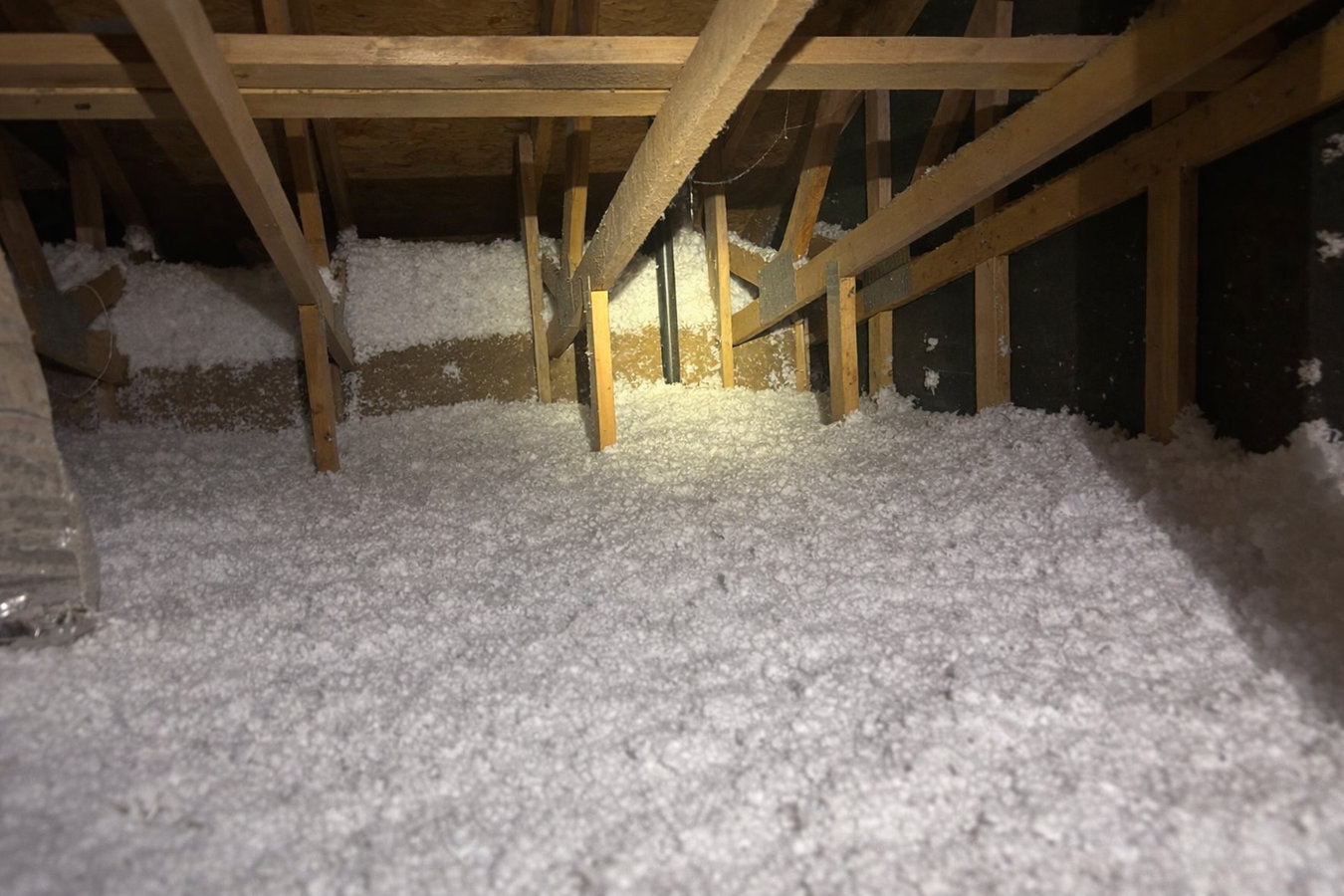
Blown-in fiberglass or cellulose is the fastest and most cost-effective way to bring an older Lancaster home up to R-49, the practical target for Climate Zone 14. Many 1990s Lancaster homes have R-19 or less in the attic — a gap wide enough to account for 40–50% of summer cooling energy loss in a typical year.
Lancaster homeowners with solar panels see the clearest payoff from air sealing: every cubic foot of conditioned air that leaks out through attic bypasses is energy the solar system has to replace. Sealing penetrations around lights, plumbing, and HVAC chases before adding insulation is the step most contractors skip — and the one that makes the biggest difference.
Blown-in insulation is well suited to Lancaster's large stock of tract homes with standard truss attics, filling around existing obstacles and achieving consistent depth across the entire attic floor. It is also the fastest installation method, meaning most jobs are completed in a single morning with no disruption to the household.
Many Lancaster homes built in the 1980s used 2x4 framing with R-11 fiberglass batts — a wall assembly that loses heat rapidly in January nights when temperatures drop near freezing. Retrofit wall insulation through injection or dense-pack methods upgrades thermal performance without requiring drywall removal.
Lancaster's PACE financing programs make retrofit insulation upgrades accessible to homeowners who want to improve energy performance without large upfront costs. We document all work to the detail level needed for rebate and financing applications from Southern California Edison and other programs available to Lancaster residents.
Lancaster gets about 6.8 inches of rain per year — far less than coastal California — and the Mojave Desert environment means low humidity, intense solar radiation, and temperature swings that stress building materials in ways mild climates never produce. Summer daytime temperatures regularly exceed 100°F. Winter overnight lows can fall near freezing, and Lancaster sees occasional frost from November through March. That range demands insulation that performs in both directions without degrading.
The city's pioneering solar mandate means a higher-than-average share of Lancaster homes have photovoltaic systems on their roofs. But solar panels only offset what the house actually uses, and a leaky, under-insulated home uses far more than it should. The California Energy Commission estimates that heating and cooling account for roughly half of a typical home's energy use — meaning insulation and air sealing improvements directly expand the practical benefit of a solar installation.
Soil conditions in parts of the Antelope Valley also produce noticeable differential settlement in older foundations, which can open gaps at sill plates and rim joists that were originally sealed. These gaps are invisible from inside the house but show up clearly during a thermal inspection. Lancaster homes along the wash corridors and in older flatland subdivisions west of Sierra Highway are particularly prone to this pattern, and it is something we look for specifically during every on-site assessment.
The crew knows the Lancaster Building and Safety office's permit desk on West Lancaster Boulevard well — we file attic conversion and spray foam permits through that office regularly and know the current turnaround times and submittal requirements, which vary from what Palmdale requires and change periodically.
The large tract subdivisions south of Avenue J and west of 20th Street West were built in the late 1980s and share nearly identical roof truss geometry, HVAC placement, and access hatch locations. Knowing those patterns means our crew arrives prepared with the right hose lengths, the correct insulation volumes, and a realistic schedule — rather than improvising once they open the attic hatch. Lancaster's geography places it in a natural wind corridor between the Tehachapi Mountains to the north and the San Gabriel Mountains to the south, a detail that matters because those winds accelerate infiltration in homes with any unsealed attic penetrations.
We also serve the western Lancaster communities near the Rosamond border along Avenue E, and the residential areas near the Quartz Hill community to the west. If your address puts you between city limits, call us — we cover the area.
We answer every inquiry within one business day. When you call, we ask a few questions about your home — year built, areas of concern, and whether you have existing insulation documentation — so we arrive prepared rather than spending the first 20 minutes of a site visit asking questions we could have answered in advance.
We inspect every area of heat loss and give you a written estimate before leaving your property. The estimate breaks down materials, labor, and any permit costs separately — no bundled pricing that obscures what you are paying for. There is no charge for the assessment and no obligation to schedule work.
Most blown-in attic jobs in Lancaster are finished in one visit. Spray foam applications require you and your pets to leave for 24 hours, which we confirm and prepare you for well in advance. Our crew handles all equipment, cleanup, and debris removal — your home is back to normal the same day for most job types.
After the job, we provide an installation certificate with R-values, materials, and square footage — the exact documentation Southern California Edison and PACE lenders require for rebate and financing applications. If a permit was required, we walk you through the inspection sign-off process.
We respond to Lancaster inquiries within one business day. The on-site assessment costs nothing, you receive a written estimate before we leave, and there is no pressure to commit on the day of the visit. Call or submit the form now.
(661) 450-6647Spray foam creates an air-tight thermal barrier that stops heat transfer and air infiltration in walls, attics, and crawl spaces.
Learn moreProper attic insulation reduces heat gain in summer and heat loss in winter, easing the load on your HVAC system year-round.
Learn moreBlown-in insulation fills irregular cavities and hard-to-reach spaces with a seamless layer of thermal protection.
Learn moreWhole-home insulation assessments and installations address every zone of heat loss to improve comfort and lower utility bills.
Learn moreOld, damaged, or contaminated insulation is safely extracted before new material is installed for maximum performance.
Learn moreInsulating the crawl space floor and rim joists keeps floors warmer, reduces moisture intrusion, and cuts energy costs.
Learn moreRetrofit and new-construction wall insulation controls heat flow and reduces noise transmission between interior spaces.
Learn moreAir sealing closes gaps, cracks, and penetrations that allow conditioned air to escape and outside air to enter your home.
Learn moreInsulating basement walls and rim joists prevents cold floors above and protects pipes from temperature extremes.
Learn moreClosed-cell spray foam delivers the highest R-value per inch and acts as both an air barrier and a vapor retarder.
Learn moreOpen-cell spray foam is a cost-effective choice for interior walls and attics where a vapor-permeable barrier is preferred.
Learn moreSealing attic bypasses before adding insulation prevents warm air from rising into the attic and greatly reduces energy waste.
Learn moreA heavy-duty vapor barrier on crawl space floors blocks ground moisture from entering the structure and damaging insulation.
Learn moreVapor barrier installation in walls and floors controls moisture movement to prevent mold growth and insulation degradation.
Learn moreRetrofit insulation upgrades existing homes with modern materials without the need for extensive demolition or reconstruction.
Learn moreCommercial insulation services cover warehouses, office buildings, and industrial facilities to meet code and reduce operating costs.
Learn moreServing these cities and communities.
Schedule your free assessment before summer peaks — attic temperatures in Lancaster reach 160°F by July, and the right insulation cuts that heat load before it reaches your living space.